Most cities explain themselves through skylines and statistics. On Saturday morning, Dubai’s Ruler chose a letter instead. In “A Letter to the Dubai Community”, Sheikh Mohammed bin Rashid Al Maktoum sets out what he calls the seven rules for life in Dubai, and he addresses them not only to Emiratis but to residents, visitors and anyone who feels an attachment to the city. That makes the letter unusually relevant to the people who read this blog.
It also arrives at a reflective moment. Dubai has recently observed ten days of official mourning for Sheikh Ahmed bin Rashid Al Maktoum, Sheikh Mohammed’s brother, who died on 21 September at the age of 76, as Khaleej Times reported. This guide therefore keeps a measured tone. First, it summarises what the letter actually says, drawing only on Gulf News’ report and Sheikh Mohammed’s own post on X. Then it turns each principle into plain, practical advice for daily life in the city.
What the Letter to the Dubai Community Says
The letter is the latest extract from The Letters, the second part of Sheikh Mohammed’s Lessons from Life series. According to Gulf News, the book contains 26 letters to his family, his team, UAE citizens and readers around the world, and it draws on nearly six decades of public service.
In his post introducing the letter, published on X late on Saturday morning, Sheikh Mohammed wrote that Dubai had built “a beautiful city, a harmonious society and an example for the world”. Gulf News also quotes his line that “Dubai is a home for the world, a home for people and a home for life”, and his observation that “everyone who lives here feels that they are at home”. Emirates 24|7 published a translation of the same post shortly afterwards.
He explains that the purpose of the seven rules for life in Dubai is to keep the city an inspiration, to preserve what makes it exceptional and to ensure it remains an outstanding place to live. The letter closes on a single idea: that a society rests on meaning rather than buildings. In his words, “The true miracle is building a society founded on great meanings, principles and values.”
The Seven Rules for Life in Dubai at a Glance
Gulf News lists the seven principles in this order:
- Life is responsibility, and responsibility gives life meaning.
- Respect recognises the value of every person.
- Excellence is the finest message we can send the world.
- Humility elevates us.
- Optimism is our way of life.
- Doing good is both our path and our way.
- A country that embraces us deserves our loyalty.
None of the seven rules for life in Dubai is a new law, and nobody will be fined for failing to be optimistic. Even so, they describe the conduct that Dubai values, and several of them map closely onto the etiquette and rules that every visitor should follow. The sections below take each principle in turn.
Rule One for Life in Dubai: Responsibility
The first principle asks every person to carry their share. Gulf News describes it as running from the employee to the leader, from the merchant acting with integrity to the doctor caring for patients. Sheikh Mohammed adds that “we are all responsible, and always will be”, and that responsibility also flows between generations.
For a visitor, responsibility is mostly about ordinary choices. In practice, that means:
- Keeping your passport or Emirates ID, hotel details and travel insurance to hand, and knowing the basics in our guide to Dubai laws for tourists.
- Respecting queues, reserved seating and signs, including women-and-children sections where they apply.
- Leaving beaches, parks and desert camps as clean as you found them.
- Supervising children closely in malls, pools and public spaces.
Rule Two for Life in Dubai: Respect in Dress and Behaviour
The second principle is the one visitors will feel most directly. Gulf News reports that it centres on respect for people, “their faith, values, culture, time, feelings and lives”, and on fairness towards women, older people, workers and those who hold different opinions. Sheikh Mohammed writes that people should judge a city by the respect it affords human dignity, not by its buildings.
What to wear, and where
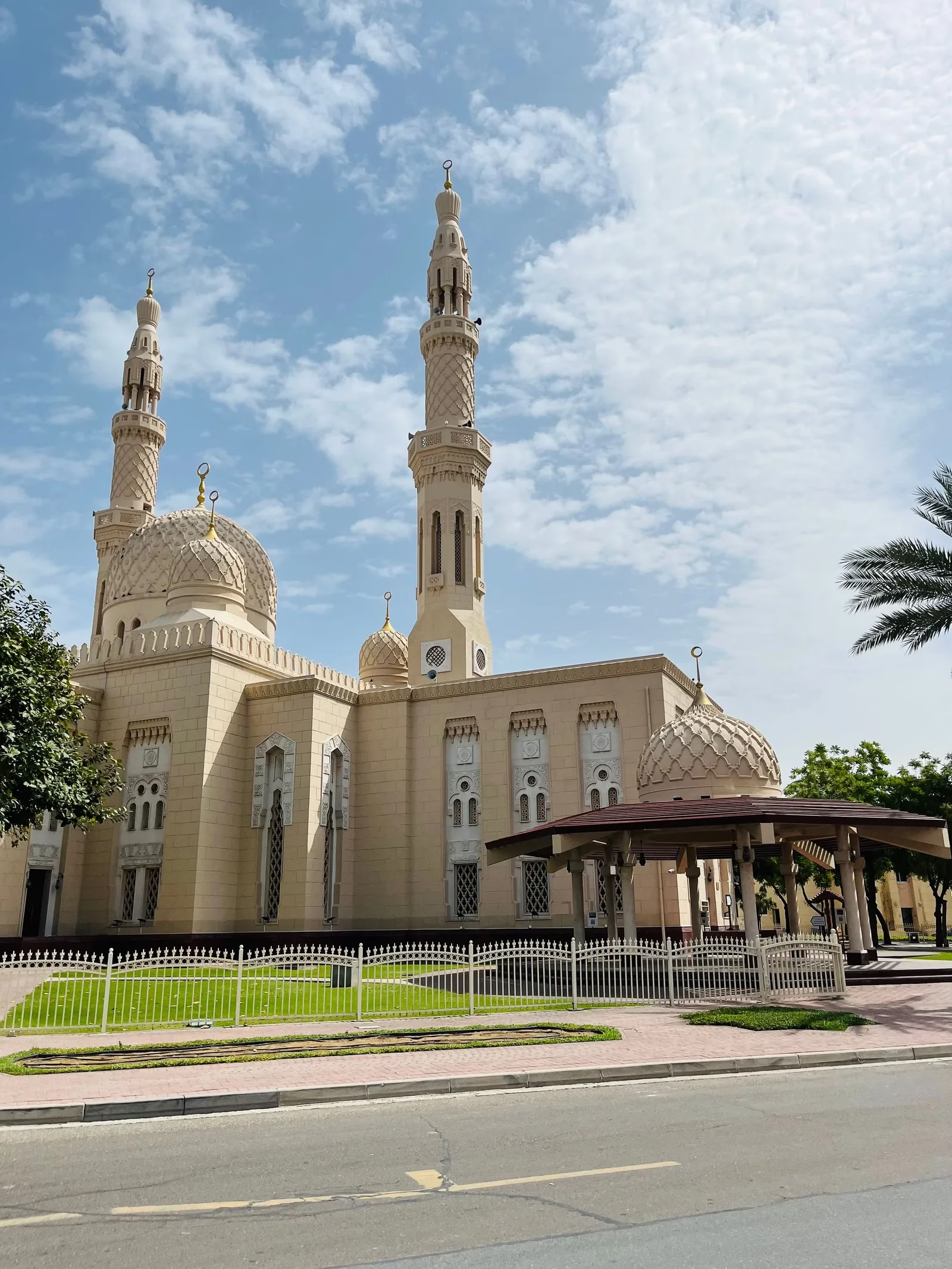
Dubai feels relaxed by regional standards, yet context matters. Swimwear belongs on the beach and by the pool. In malls, souks, government offices and heritage areas, it is wise to cover your shoulders and knees. Mosques ask for more, and Jumeirah Mosque’s own dress code is a useful benchmark: men should avoid shorts and sleeveless tops, while women should cover their arms, legs and hair. Helpfully, the mosque lends abayas, headscarves and kanduras to visitors who need them.
Photography and privacy
Always ask before photographing people, and be especially careful with women and families. The UAE takes privacy seriously, and sharing images of others without consent can lead to legal trouble. Landmarks, skylines and your own group are, of course, fair game.
Public behaviour
Public displays of affection beyond holding hands are best avoided. Likewise, rude gestures and offensive language, whether spoken or posted online, can have serious consequences. Licensed venues serve alcohol, but public drunkenness is an offence. Our guide on whether Dubai is safe explains why the city feels so orderly, and much of that comes from shared respect rather than enforcement.
Rule Three for Life in Dubai: Excellence in the Detail
The third principle is Itqan, an Arabic concept of doing something with precision, care and mastery. Gulf News quotes Sheikh Mohammed’s view that “excellence is the finest message we can offer the world”. He suggests the world forms its view of Dubai through the quality it encounters, from airport staff to road workers and engineers. He also warns that small instances of disorder can accumulate and erode past achievements.
Visitors can play their part in modest ways. Arrive on time for tours and bookings, because guides often run tight schedules. Report a problem politely rather than angrily. And if a hotel worker, taxi driver or guide does a fine job, say so, or leave a review that names them.
Rule Four for Life in Dubai: Humility and Good Manners
“We rise through humility,” Sheikh Mohammed writes in the fourth principle. Gulf News adds his reminder that Dubai began from modest circumstances: “We began with nothing, and God blessed us.” Our short history of Dubai shows how recent that transformation is, which makes the point vivid.
In everyday terms, humility looks like curiosity and good manners:
- Greet people with “As-salamu alaykum”; the reply is “Wa alaykum as-salam”. A simple “shukran” (thank you) goes a long way.
- Use your right hand to eat, to pass things and to accept a cup of Arabic coffee.
- When offered coffee, accept at least one small cup; a gentle shake of the empty cup signals that you have had enough.
- Let an Emirati woman offer her hand first rather than assuming a handshake.
- Ask questions. Most people are glad to explain their customs to a respectful guest.
Rule Five for Life in Dubai: Optimism
The fifth principle describes optimism as a way of working rather than a mood. Sheikh Mohammed repeats his long-held view that impossibility is ultimately a point of view, and Gulf News quotes his belief “that what lies ahead will be more beautiful”.
For a visitor, this is a gentle reminder to approach the unfamiliar with an open mind. A dish you cannot yet pronounce, a custom you do not fully understand or a neighbourhood far from the famous sights often becomes the highlight of a trip.
Rule Six for Life in Dubai: Doing Good
The sixth principle is more concrete. Gulf News reports the letter’s view that generosity means far more than occasional charitable donations. Instead, the letter names small acts: a kind word, a smile, removing something harmful from a road, helping someone who is lost or encouraging a young person. The community’s blessings, he writes, bring a duty to become “a bridge for good, a river that gives people water and a source of hope”.
For residents and visitors alike, that might mean thanking a delivery rider who has crossed the city in the heat, or giving a lost tourist directions at a Metro station. If you want to donate, use licensed charities and official channels; informal collections are not permitted without a licence.
Rule Seven for Life in Dubai: Loyalty and the Law
The seventh principle concerns loyalty to “a country that embraces us”. Gulf News says Sheikh Mohammed defines it as respecting the constitution and laws, safeguarding the nation’s achievements, honouring its flag and living by values such as sincerity, justice and integrity.
Visitors are not asked for allegiance, but they are guests of the country. In practice, follow local laws even where they differ from home. Treat the flag and national symbols with respect, and stay courteous during national occasions. UAE National Day falls on 2 December, and it is a joyful time to be in the city.
Prayer Times and Ramadan: Courtesy That Counts
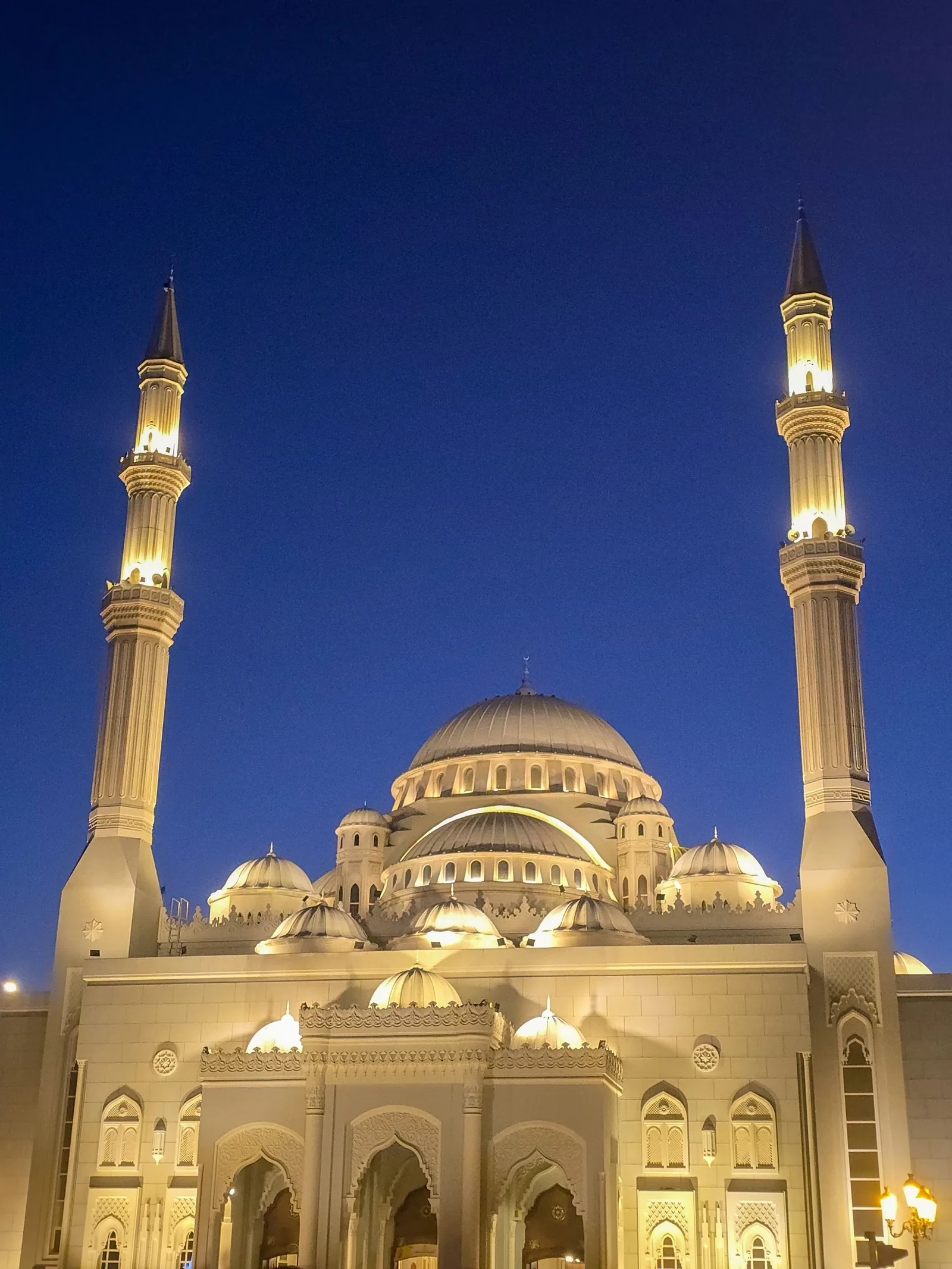
Respect for faith, which the seven rules for life in Dubai name explicitly, is most visible around prayer. The call to prayer sounds five times a day across Dubai. When it does, lower loud music, and never walk directly in front of someone who is praying. Around midday on Fridays, the main congregational prayer means busier roads near mosques and a quieter hour in some neighbourhoods.
Ramadan brings its own rhythm. The next holy month should begin in early 2027, although moon sighting will confirm the exact dates. Rules have relaxed in recent years, and many restaurants now serve during the day. Nevertheless, eating, drinking or smoking openly in the street during fasting hours remains discourteous, and dressing more conservatively is appreciated. Our guide to Ramadan in Dubai covers iftar, opening hours and etiquette in more detail.
Where to Experience Emirati Hospitality in Dubai
Reading about the seven rules for life in Dubai is one thing; sitting down with an Emirati host is quite another. Two experiences, both run by the Sheikh Mohammed bin Rashid Al Maktoum Centre for Cultural Understanding, offer the most direct way in.
A cultural meal in Al Fahidi
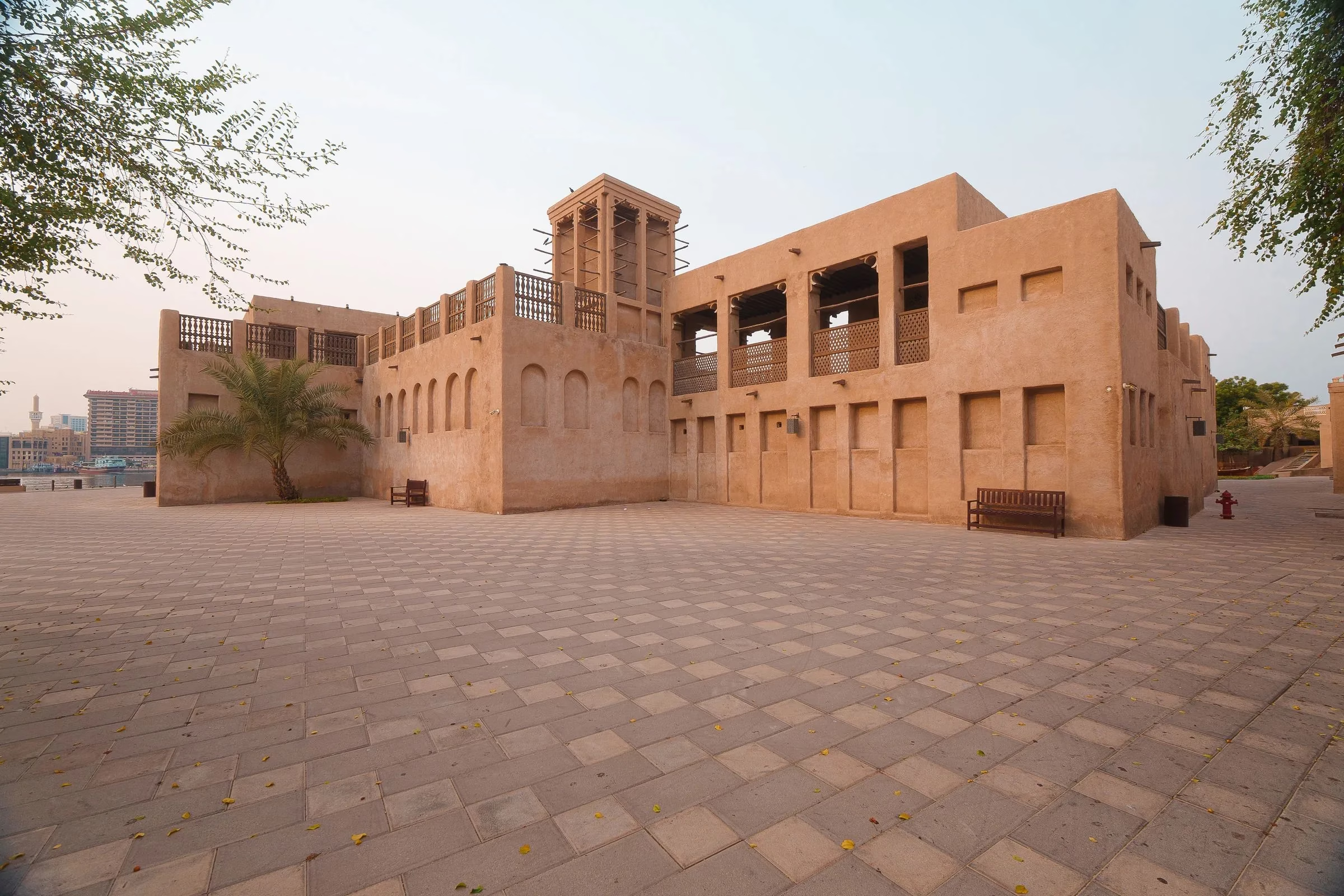
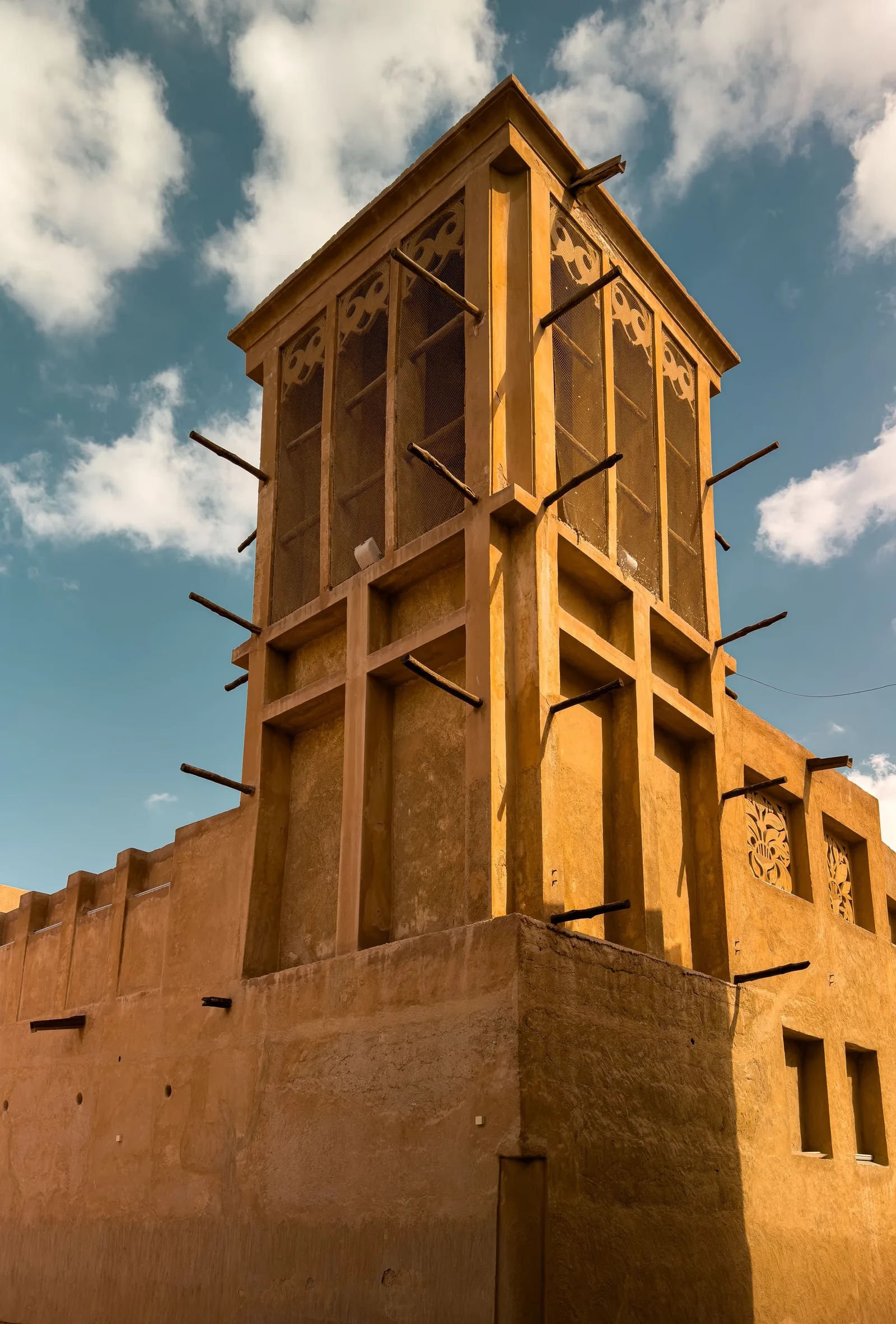
The Centre’s cultural meals take place at House 26 in the Al Fahidi Historical Neighbourhood. An Emirati presenter leads the conversation over a traditional spread, and the presenters welcome questions on any subject. The Centre currently lists these sessions:
- Breakfast: AED 130, Monday and Wednesday at 9am.
- Brunch: AED 130, Friday to Sunday at 10.30am.
- Lunch: AED 145, Monday to Thursday at 1pm.
- Fuala (Emirati tea time): AED 150, Tuesday at 1pm.
- Dinner: AED 160, Tuesday at 6.30pm (replaced by iftar during Ramadan).
Book at least a day ahead, and share any dietary needs in advance. If the dishes intrigue you, our guide to Emirati food explains what to order elsewhere in the city.
A guided visit to Jumeirah Mosque
Jumeirah Mosque runs public guided visits from Saturday to Thursday at 10am and 2pm, with no tours on Fridays. Admission is AED 55 per person, including light Emirati refreshments. You do not need to book ahead, and registration opens 30 minutes before each session.
Wander, read and listen
Afterwards, stroll the lanes of Al Fahidi and the creekside souks, or read more in our overview of Dubai culture. For a quieter afternoon, the Mohammed bin Rashid Library is a fine place to sit with a book.
The Letters: When the English Edition Arrives
According to Khaleej Times and Gulf News, the Arabic edition of The Letters went on sale in major UAE bookshops on 1 October. The English edition should follow on 15 October. Gulf News notes that Sheikh Mohammed launched the book on 6 September, and he has been sharing individual letters since then. For English-speaking residents, the full text will offer far more context than any summary.
Conclusion
The seven rules for life in Dubai are not a rulebook to memorise before you land. Rather, they describe a civic culture of responsibility, respect, care, humility, hope, kindness and loyalty. Visitors who dress thoughtfully, ask before taking photographs, honour prayer times and accept a cup of coffee graciously are already living by most of them. If you want to understand the city behind the skyline, book a cultural meal in Al Fahidi, listen more than you speak, and read the English edition when it arrives.
FAQ
What are the seven rules for life in Dubai?
According to Gulf News, they are responsibility, respect, excellence, humility, optimism, doing good and loyalty to the country. Sheikh Mohammed set them out in “A Letter to the Dubai Community”, an extract from his book The Letters.
Are the seven principles new laws for tourists?
No. They are guiding values rather than legislation. Existing UAE and Dubai laws on public behaviour, alcohol, privacy and dress still apply, and our guide to Dubai laws for tourists covers the essentials.
Who is the letter addressed to?
Gulf News reports that the letter speaks to the people of Dubai, those who have made the city their home, its visitors and those who love it.
When is the English edition of The Letters released?
Khaleej Times and Gulf News report that the English edition is due on 15 October 2026, after the Arabic edition went on sale on 1 October.
How can visitors experience Emirati culture respectfully?
Book a cultural meal with the Sheikh Mohammed Centre for Cultural Understanding in Al Fahidi, or join a guided visit to Jumeirah Mosque. Dress modestly, ask before taking photographs and come with questions.
Key Takeaways
- Sheikh Mohammed’s “A Letter to the Dubai Community” sets out seven principles: responsibility, respect, excellence, humility, optimism, doing good and loyalty.
- The letter speaks to residents and visitors as well as citizens.
- Respect in practice means modest dress away from beaches, asking before photographing people and courteous public behaviour.
- Lower music during the call to prayer, and avoid eating openly in public during fasting hours in Ramadan.
- Cultural meals in Al Fahidi start at AED 130; Jumeirah Mosque tours cost AED 55 and need no booking.
- The English edition of The Letters is due on 15 October 2026.
Useful Links
- Gulf News: Mohammed bin Rashid sets out seven rules for life in Dubai (3 Oct 2026)
- Sheikh Mohammed on X: A Letter to the Dubai Community (Arabic)
- Emirates 24|7: Mohammed bin Rashid’s message to the Dubai community
- Khaleej Times: 26 letters compiled in Sheikh Mohammed’s new book
- Sheikh Mohammed Centre for Cultural Understanding: cultural meals
- Jumeirah Mosque: public guided visits
- Travel to Dubai Blog: Dubai laws for tourists
- Travel to Dubai Blog: Dubai culture
- Travel to Dubai Blog: Ramadan in Dubai