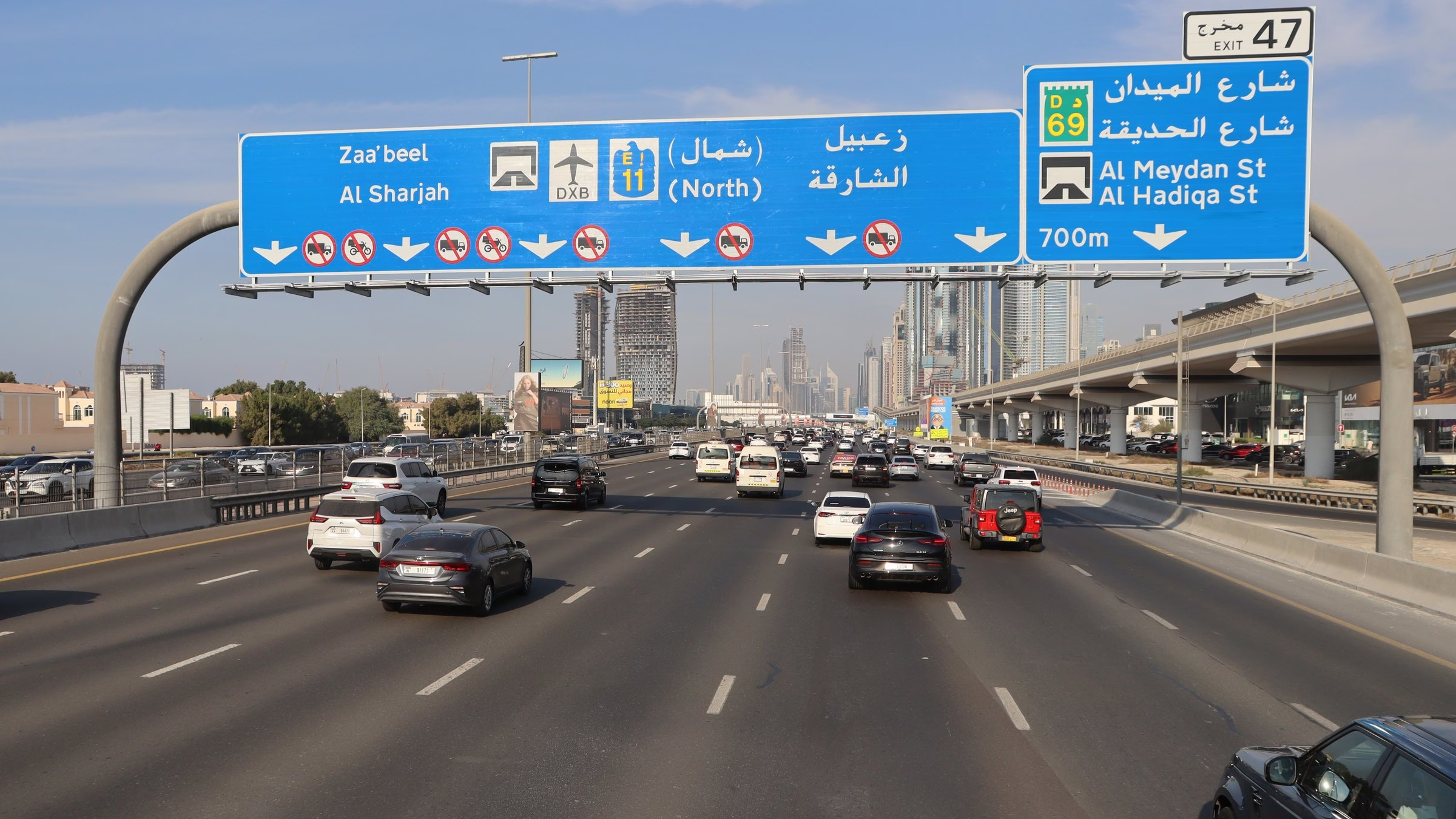
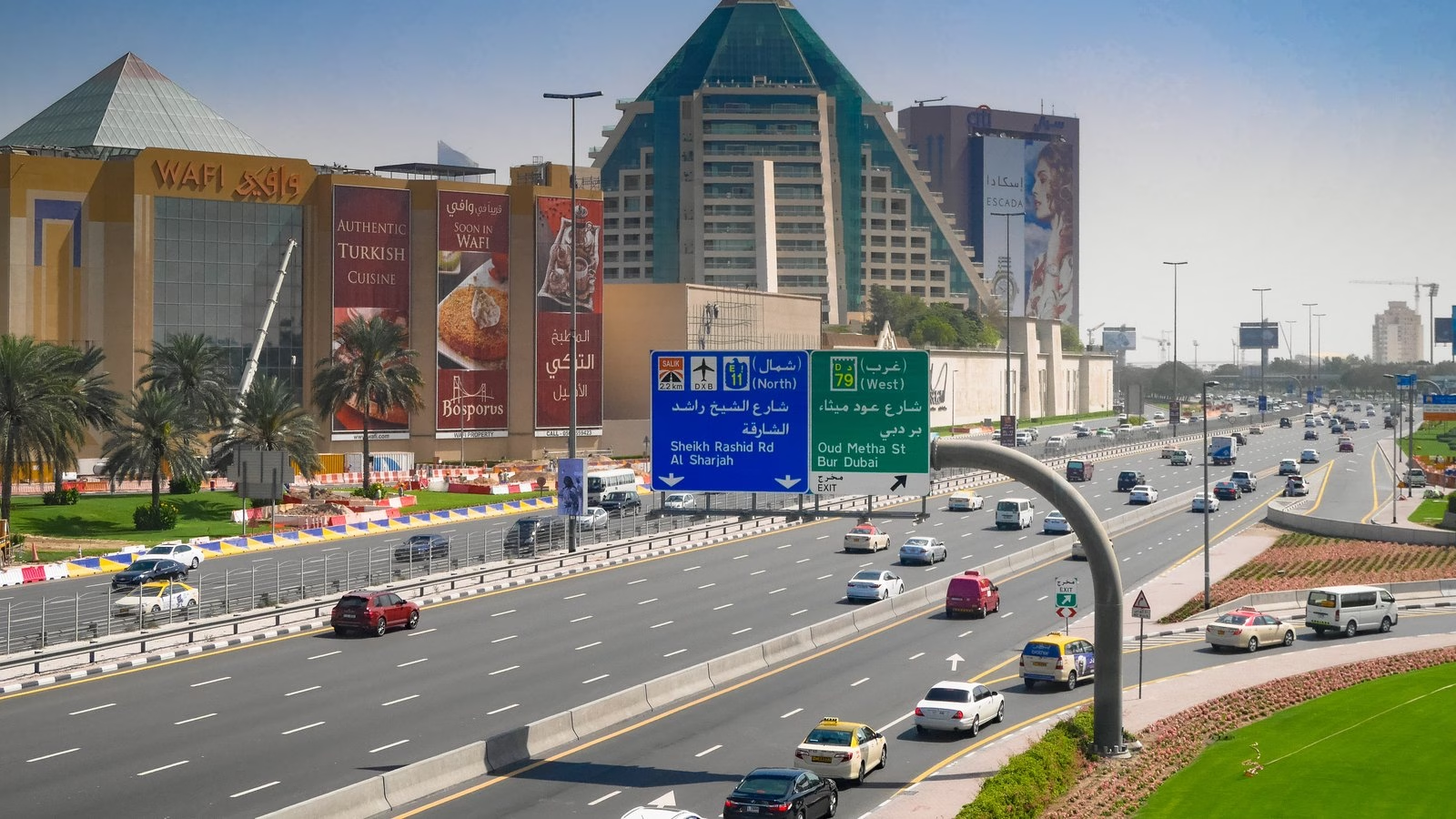
Sheikh Zayed Road approaching Exit 47 for Al Meydan Street. Photo: Coolcaesar, Wikimedia Commons, “E11 Sheikh Zayed Road Northeast Near Exit 47”, CC BY 4.0 (cropped and resized).
Road signs in Dubai rarely make headlines, yet five of them are about to change the rhythm of thousands of daily commutes. From Sunday 1 November 2026, new Dubai speed limits apply on five major streets. Three stretches will get faster, while two will slow down. The Roads and Transport Authority (RTA) announced the changes with Dubai Police on Wednesday afternoon. Since then, the story has run through the morning news and social feeds.
Perhaps you drive in the city, rent a car for a holiday or simply take taxis across Oud Metha, Meydan or Satwa. Either way, it helps to know exactly where the numbers move. This guide sets out every change, explains why the RTA made it, and covers what the new limits mean for radar margins and fines.
Dubai Speed Limits: The Five Roads Changing on 1 November
According to the RTA, as reported by Khaleej Times and Gulf News, the new limits cover specific sections only, and they apply in both directions:
- Al Asayel Street: up from 60 to 80 km/h, between Oud Maitha Street and Al Meydan Street.
- Al Mustaqbal Street: up from 60 to 70 km/h, between Sheikh Rashid Street and Al Meydan Street.
- Latifa bint Hamdan Street: up from 60 to 70 km/h, between Sheikh Zayed Road and Al Khail Road.
- Al Rebat Street: down from 100 to 90 km/h, between Marrakech Street and Sheikh Mohammed bin Zayed Road.
- Sheikh Sabah Al Ahmad Al Jaber Al Sabah Street: down from 80 to 70 km/h, between 2nd December Street and Khalid bin Al Waleed Street.
Before the start date, crews will swap the signs along each affected section. The RTA also says it will reprogramme the speed cameras so that they match the new limits.
Where You Can Drive a Little Faster
The biggest jump is on Al Asayel Street, where the limit rises by 20 km/h. That stretch links Oud Maitha Street with Al Meydan Street. As a result, it matters to anyone heading between the older districts near the Creek and Meydan. Al Mustaqbal Street and Latifa bint Hamdan Street both gain 10 km/h.
However, a higher number is not an invitation to race. These are still city streets with junctions, slip roads and, at times, pedestrians. In practice, the change mostly brings the posted limit closer to the speed that traffic already flows at when the road is clear.
Where You Need to Slow Down
The two reductions deserve more attention, because habit is what catches drivers out. On Al Rebat Street, the familiar 100 km/h becomes 90 km/h between Marrakech Street and Sheikh Mohammed bin Zayed Road. Meanwhile, Sheikh Sabah Al Ahmad Al Jaber Al Sabah Street drops from 80 to 70 km/h between 2nd December Street and Khalid bin Al Waleed Street.
If you use either road every day, your foot will remember the old limit for a week or two. For that reason, it is worth watching the new signs closely in early November. Gulf News also advised motorists to check the posted limits on these two streets in particular.
Why the RTA Changed the Dubai Speed Limits
The RTA says the move follows an engineering and technical study carried out over recent months with an international consultant. Its aim was to improve traffic flow, raise road safety and match each limit to the character of the road.
The changes also draw on the 2026 update to the Dubai Speed Management Manual. According to Khaleej Times, the RTA weighs several factors when it sets a limit:
- traffic volumes and the road’s design speed
- how much urban development lines the road
- actual vehicle speeds, measured at the 85th percentile
- pedestrian activity and nearby key facilities
Put simply, the RTA looks at how fast most drivers already travel and at who else uses the road. As a result, a quiet arterial road may go up, while a busier one may come down. Gulf News added that the work supports the Dubai Traffic Safety Strategy and the 2025 action plan for road safety.
Radar Margins Under the New Dubai Speed Limits
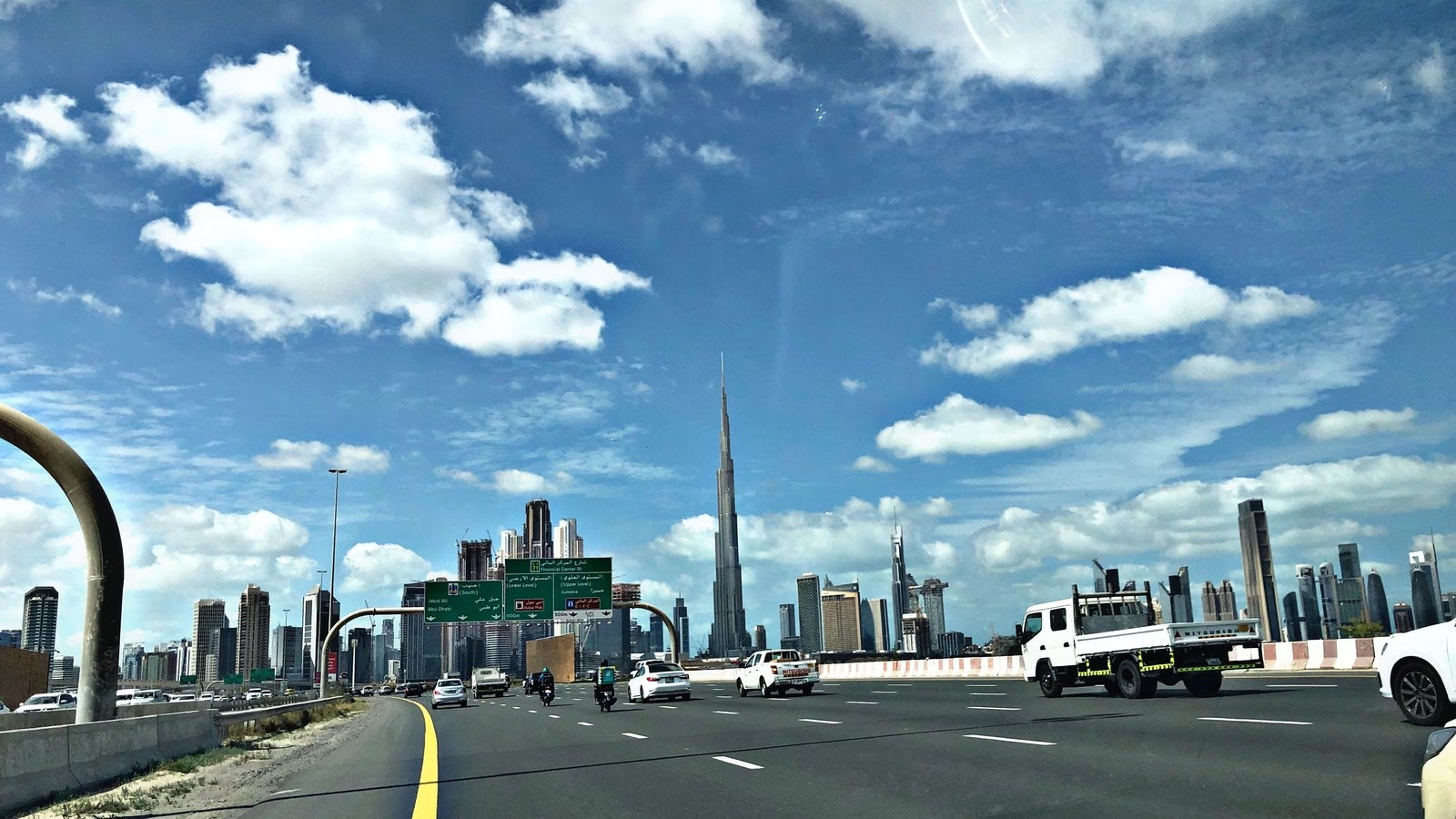
Many drivers talk about a “buffer” above the posted limit, so it is worth being precise. In its explainer published on Thursday morning, Gulf News separates two figures. The first is the posted limit on the sign. The second is the radar control speed, which is the point at which a camera records a violation.
On many major Dubai roads, Gulf News reports, the radar threshold sits about 20 km/h above the posted limit. For example, an 80 km/h road may trigger a camera at 101 km/h. Even so, the paper stresses that this margin is not permission to speed. Furthermore, you cannot see the threshold anywhere on the road, so the sign is the only safe guide.
Speeding Fines in Dubai
The new Dubai speed limits do not change the penalties. Gulf News lists the current fines under the UAE traffic rules as follows:
- up to 20 km/h over the enforcement limit: Dh300
- 21 to 30 km/h over: Dh600
- 31 to 40 km/h over: Dh700
- 41 to 50 km/h over: Dh1,000
- 51 to 60 km/h over: Dh1,500, six black points and a 15-day vehicle impoundment
- more than 60 km/h over: Dh2,000, 12 black points and a 30-day impoundment
- more than 80 km/h over: Dh3,000, 23 black points and a 60-day impoundment
Clearly, the top bands bring far more than a fine. An impounded car can wreck a holiday or a working week, so the easiest saving is simply to drive to the sign.
New Dubai Speed Limits: Advice for Visitors and Hire-Car Drivers
Visitors feel these changes most, because they have no old habits to rely on. If you plan on renting a car, our guide to renting a car in Dubai covers deposits and paperwork. Most rental firms pass traffic fines on to the hirer, often with an admin fee on top. So, check your contract before you drive away.
- Use a navigation app that shows live speed limits, but trust the physical sign if the two disagree.
- Learn the new Dubai street signs, which make road names easier to spot at junctions.
- Check for fines on the Dubai Police or RTA apps before you return a hire car; our round-up of useful Dubai apps lists the essentials.
- Before you buy cover online, read our Dubai Police car insurance checks.
Equally, you may prefer not to drive at all. Taxis and ride-hailing cars follow the same Dubai speed limits, so your journey times will barely change.
How the Papers Covered the Story
Khaleej Times published the full list on Wednesday, together with the criteria the RTA uses. Gulf News ran the news the same afternoon and, on Thursday morning, followed it with a guide to radar margins and fines. Arabian Business published its own full list of increases and reductions in the early hours of Thursday. On X, the Gulf News post on the change drew thousands of views within hours, and Lovin Dubai ran a thread for drivers.
Conclusion
The new Dubai speed limits are a small change on paper, yet they will touch many daily drives. Three roads get a little quicker, and two get a little calmer. Above all, the safest approach from 1 November is the simplest one. Read the sign, not your memory, and treat any radar margin as a myth rather than a plan.
Frequently Asked Questions
When do the new Dubai speed limits start?
They take effect on Sunday 1 November 2026. The RTA will replace the signs and reprogramme the cameras before then.
Which roads get a lower limit?
Al Rebat Street drops from 100 to 90 km/h, and Sheikh Sabah Al Ahmad Al Jaber Al Sabah Street drops from 80 to 70 km/h, on the stated sections only.
Do the changes apply in both directions?
Yes. According to the RTA, each change applies in both directions on the affected section.
Is there still a grace margin on Dubai radars?
Gulf News reports that radar thresholds are typically 20 km/h above the posted limit on many major roads. However, this is not guaranteed, so you should always follow the sign.
Will tourists in hire cars be fined?
Yes. Cameras record the car, and the rental company usually charges the fine to the hirer, often with an admin fee.
Key Takeaways
- New Dubai speed limits start on five roads on 1 November 2026.
- Al Asayel Street rises to 80 km/h, while Al Mustaqbal and Latifa bint Hamdan Streets rise to 70 km/h.
- Al Rebat Street falls to 90 km/h, and Sheikh Sabah Al Ahmad Al Jaber Al Sabah Street falls to 70 km/h.
- The RTA will change the signs and reprogramme the cameras before the start date.
- Speeding fines stay the same, from Dh300 up to Dh3,000 with black points and impoundment.