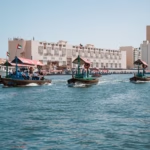
Aditya Sethia, Unsplash
Ask for directions in Dubai and you will rarely hear a street name. Instead, you will hear “behind the mosque”, “opposite the petrol station” or “the building with the pharmacy downstairs”. Landmarks have always done the work that street signs do in other cities, and every taxi driver and delivery rider has learned to live with it. The new street signs Dubai announced this week are designed to change that.
The change will be gradual. Dubai is replacing the signs that name its areas and streets, and redesigning the plates on every home. Today, Gulf News published a full explainer on Dubai’s new street signs, following the official announcement on Wednesday. This guide explains what is changing, where you will see it first, what the colours mean and, above all, how to find an address in Dubai in the meantime.
What Has Been Announced
On 7 October 2026, the Supreme Committee for Urban Planning, working with the Roads and Transport Authority (RTA) and Dubai Municipality, launched a new visual identity for the city’s addressing system. According to the Dubai Media Office, a specialist wayfinding consultant developed the designs.
The project covers three kinds of sign:
- Area and sector identification signs, which tell you which community you have entered.
- Internal street name signs inside residential and commercial areas.
- House number plates, which will carry each property’s Makani number and a QR code.
In addition, the identity will later extend to bus stops, smart apps and area map boards, the RTA says. Khaleej Times quotes the authority as saying the unified designs should help residents and visitors identify locations and find their way around the city.
Where the Dubai New Street Signs Appear First
The first phase begins this year. More than 2,000 signs will be installed or replaced in five areas:
- Za’abeel 1.
- Za’abeel 2.
- Nad Al Sheba.
- Al Khawaneej 1.
- Nazwa.
After that, the wider rollout starts in the fourth quarter of 2026. It will cover 186 areas across 19 sectors, with completion targeted for 2030. No exact start date or area-by-area timetable has been published yet, so it is too early to say when your street will change.
The RTA and Dubai Municipality have, however, set out how they will choose the order. Priority goes to areas with strong urban growth and population density, central and lively districts, places with residential and tourist attractions, and areas where many streets still have no formal address.
What the Five Colours on the New Street Signs Mean in Dubai
The most eye-catching change is colour. The new identity uses five colours, each linked to the geography and character of an area. So far, the authorities have explained only two of them:
- Blue marks areas close to the sea.
- Gold marks areas with a desert character.
The other three colours have not been described in the official statements, and we would rather say so than guess. Once the first signs go up in the five pilot areas, the full palette should become clear.
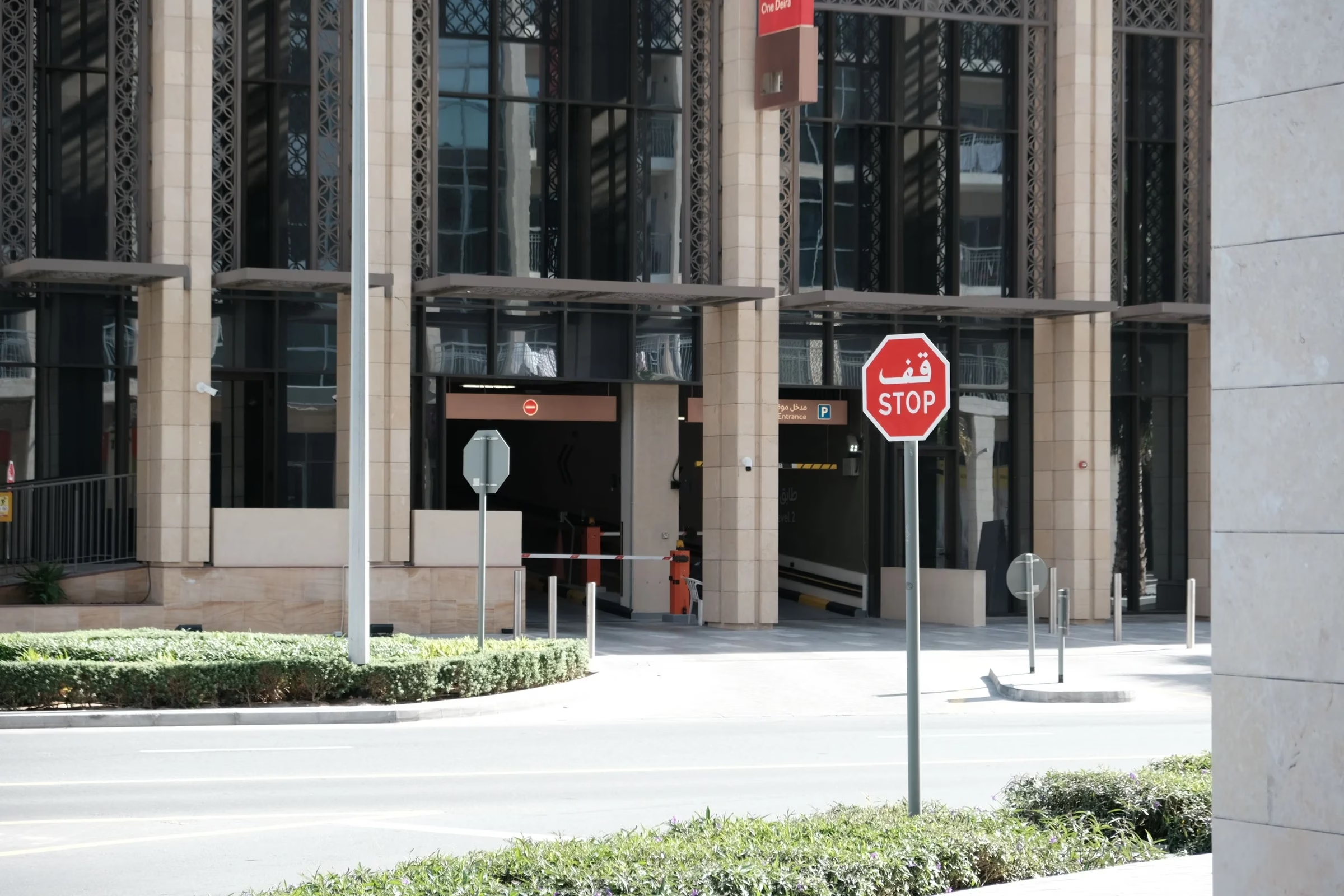
What Is Not Changing: Dubai’s Road Sign Colours
It is easy to confuse this project with the big signs on the motorways. As Gulf News points out, the announcement does not replace Dubai’s existing colour-coded road signs. If you drive, the system you already know stays in place:
- Blue signs mark E routes between emirates, such as Sheikh Zayed Road (E11) and Emirates Road (E611). They carry the UAE falcon emblem.
- Green signs mark D routes within Dubai and carry the city’s castle emblem.
- White signs name streets inside residential neighbourhoods.
- Brown signs point to tourist attractions and landmarks.
In other words, the new designs change what you see once you leave the main road and enter a community. For tips on the roads themselves, see our guide to renting a car in Dubai.
How Makani Numbers and QR Codes Work on Dubai’s New Street Signs
Every building in Dubai already has a Makani number. It is a unique 10-digit code, run by Dubai Municipality, that pins the exact location of an entrance. You will usually find it on a small plate near the door, and you can look it up or share it with the official Makani app.
Under the new system, house plates will show the Makani number together with a QR code, in colours that match the area signs. The RTA and Dubai Municipality have already approved the final plate designs.
QR codes will also appear on other signs. According to the official statement, scanning them will tell you about:
- The sector and area you are in.
- The meaning behind street and area names.
- Points of interest nearby.
- Other useful location information.
For visitors, the second point is quietly delightful. Many Dubai names recall old trades, families, plants and landmarks, and until now you had to ask a local to learn the story. The heritage districts around Dubai Creek are full of such names, and our Sheikh Rashid heritage trail is a good place to start exploring them.
How to Find an Address in Dubai Today
The new signs will take until 2030 to reach every area. Meanwhile, these habits will get you to the right door, whether you are visiting for a week or have just moved here:
- Ask your hotel or host for the Makani number, and save it on your phone.
- Share a map pin rather than typing an address into a ride-hailing app.
- Give a taxi driver the area name and a nearby landmark first, then the street.
- Look for the Makani plate at a building entrance if a courier cannot find you.
- Note the area number as well as the name, because Al Barsha 1 and Al Barsha 2 are not the same place.
- Check the building name, since many towers are better known by name than by street.
If you rely on public transport, our Dubai Metro guide covers stations and fares, and our guide to getting a taxi in Dubai explains booking and payment.
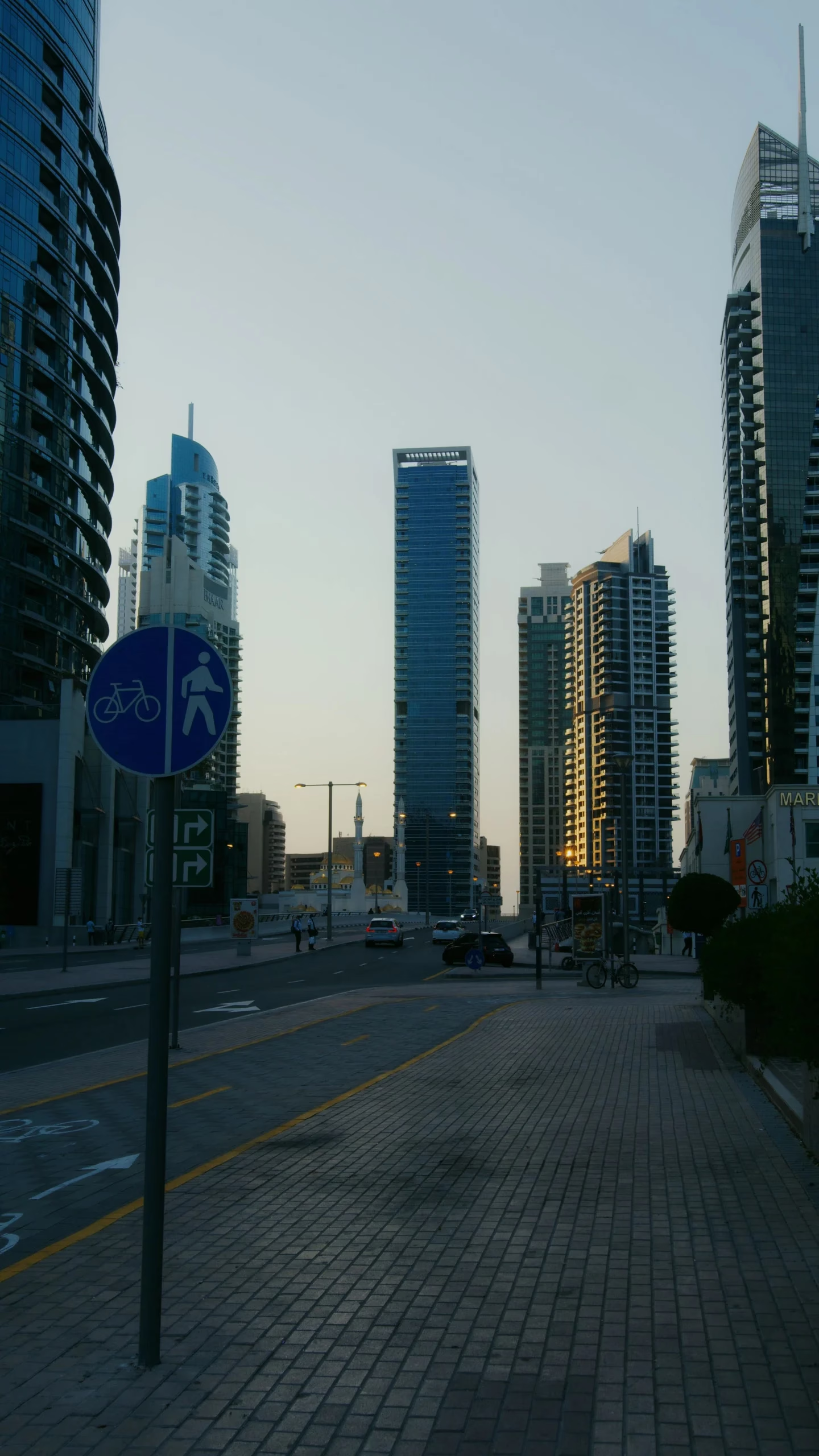
What Residents in the First Five Areas Should Expect
If you live in Za’abeel 1 or 2, Nad Al Sheba, Al Khawaneej 1 or Nazwa, you may see crews replacing signs and house plates before the end of the year. So far, no announcement has asked residents to apply for anything or pay for a new plate.
Because the new plates carry each property’s Makani number, the number itself does not appear to be changing. Even so, it is sensible to check the plate once it is fitted and keep using the same map pin for deliveries. If anything looks wrong, contact Dubai Municipality through its official channels.
The addressing project is also part of a broader effort to plan Dubai’s neighbourhoods more carefully. Earlier this week, for instance, the authorities set out where shared housing is allowed, which we covered in our guide to Dubai shared accommodation rules.
What the Papers Reported
All three major English-language outlets covered the story. Khaleej Times broke it on Wednesday evening and focused on the colours and the five pilot areas. Gulf News reported the launch the same evening, and today it followed up with its explainer on the colours, QR codes and existing road signs. Arabian Business reported shortly after midnight that Dubai street signs and house numbers are changing, with 186 areas set to get new colours and QR codes. The official details come from the Dubai Media Office, the RTA and WAM.
Conclusion: Why the New Street Signs Matter for Dubai
Dubai’s new street signs will not transform the city overnight. Instead, they will arrive area by area until 2030, starting with five districts this year. Even so, the change matters. Colour-coded area signs, clearer street names and house plates with Makani numbers and QR codes should make Dubai easier to navigate for everyone, from first-time visitors to delivery riders. Until the signs reach your street, save Makani numbers, share map pins and keep a landmark in mind. For more on how the city is changing, see what Dubai is actually building and our guide to seven rules for life in Dubai.
FAQ
What are Dubai’s new street signs?
They are redesigned area signs, internal street name signs and house number plates. They use unified designs, five area colours and QR codes, and they were launched on 7 October 2026 by the Supreme Committee for Urban Planning, the RTA and Dubai Municipality.
Which areas in Dubai get the new street signs first?
The first phase covers Za’abeel 1, Za’abeel 2, Nad Al Sheba, Al Khawaneej 1 and Nazwa, with more than 2,000 signs installed or replaced this year.
When will every area have the new signs?
The rollout covers 186 areas in 19 sectors. It starts in the fourth quarter of 2026 and is due to finish in 2030.
What do the colours on Dubai’s new street signs mean?
Each of the five colours reflects an area’s geography. Blue marks areas near the sea, and gold marks desert areas. The authorities have not yet described the other three.
Will my Makani number change?
Nothing announced so far says it will. The new house plates are designed to display each property’s existing Makani number alongside a QR code.
Are Dubai’s blue and green road signs changing?
No. The project covers area signs, street names and house plates. Blue E route and green D route signs on the main roads stay as they are.
Key Takeaways
- Dubai launched a new addressing identity on 7 October 2026, led by the Supreme Committee for Urban Planning with the RTA and Dubai Municipality.
- More than 2,000 signs will be replaced this year in Za’abeel 1, Za’abeel 2, Nad Al Sheba, Al Khawaneej 1 and Nazwa.
- The full rollout covers 186 areas in 19 sectors, from late 2026 to 2030.
- Five colours reflect each area’s character: blue for the coast and gold for the desert so far.
- House plates will show the Makani number and a QR code, and other signs will explain street names and nearby sights.
- Motorway sign colours are not changing, so blue E routes and green D routes stay the same.
- Until the signs reach your area, share Makani numbers and map pins rather than typed addresses.
Useful Links
- Gulf News: Dubai’s new street signs explained, what is changing and what the colours mean (9 Oct 2026)
- Gulf News: Dubai launches new addressing system with colour-coded area signs (7 Oct 2026)
- Khaleej Times: Dubai to get new street signs with colours inspired by each area (7 Oct 2026)
- Arabian Business: Dubai street signs and house numbers are changing (9 Oct 2026)
- Dubai Media Office: Urban Planning Committee, RTA and Dubai Municipality launch new addressing identity
- RTA: New visual identity for Dubai’s areas
- Dubai Municipality official website
- Travel to Dubai Blog: Dubai taxis, how do you get one?
- Travel to Dubai Blog: Dubai Metro guide
- Travel to Dubai Blog: Dubai shared accommodation rules
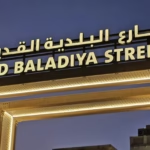
Featured photo: the Old Baladiya Street sign in Deira at dusk, Aditya Sethia, Unsplash. Body photos: nana liu and Tima Miroshnichenko, Pexels.