Sheikh Rashid bin Saeed Al Maktoum, his son recalls, carried a small compass on his journeys so that he could always find the direction of prayer. This morning, that compass returned to the spotlight. In a letter to his late father, Sheikh Mohammed bin Rashid Al Maktoum, Ruler of Dubai, wrote that “your compass still guides us”. Within hours, Sheikh Rashid’s name was trending across the city on X, and it is the perfect moment to follow a Sheikh Rashid heritage trail of your own.
The best way to understand why is to walk through the Dubai he built. This walking-and-abra route links four places you can visit today: the creek-side house where his family lived, the waterway he dredged, the villa where the UAE was born, and the tower that once defined the skyline. Along the way, it gives you opening hours, ticket prices and an easy one-day route, drawn from official sources and from what Gulf News and Khaleej Times have reported.
Why Sheikh Rashid Is Trending in Dubai Today
Sheikh Rashid ruled Dubai from 1958 until his death on 7 October 1990, as Khaleej Times noted at last year’s anniversary. Marking this year’s anniversary, Sheikh Mohammed published “A Letter to My Father” on his X account. Gulf News reports that he describes Sheikh Rashid as “my first teacher, my first leader and my first inspiration”, and as “the ruler, the judge, the engineer, the merchant, the reformer, the administrator and the economist”.
The letter is personal; however, it is also a portrait of a city. Sheikh Mohammed writes that he still sees his father in Dubai’s “sea and its creek” and in its desert. He also lists lessons that read like a planning manual: rise before dawn, plan carefully, avoid waste and treat credibility as “the true currency”. In fact, those habits shaped every place on the Sheikh Rashid heritage trail.
There is more to come. Gulf News reports that Sheikh Mohammed’s letters are collected in a new book, “The Letters”. The Arabic edition reached UAE bookshops on 1 October, and the English edition is due on 15 October. Our recent guide to seven rules for life in Dubai looks at an earlier letter from the same series.
Who Was Sheikh Rashid, the Builder of Modern Dubai?
When Sheikh Rashid became Ruler in 1958, Dubai was a trading town on a shallow creek. The pearl trade had collapsed and no one had yet struck oil, as The National explains. Over the next three decades, he turned it into a port city with a bridge, a deep-water harbour, a trade centre and one of the world’s busiest ports.
Khaleej Times lists the milestones: Port Rashid in 1972 and Jebel Ali Port in 1979, among many others. At the same time, he helped Sheikh Zayed bin Sultan Al Nahyan create the United Arab Emirates in 1971, and he became the country’s first Vice President. For a wider picture of how the city grew, read our history of Dubai.
Stop 1: Al Shindagha Museum, Where the Sheikh Rashid Heritage Trail Begins
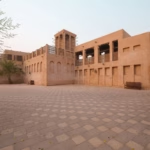
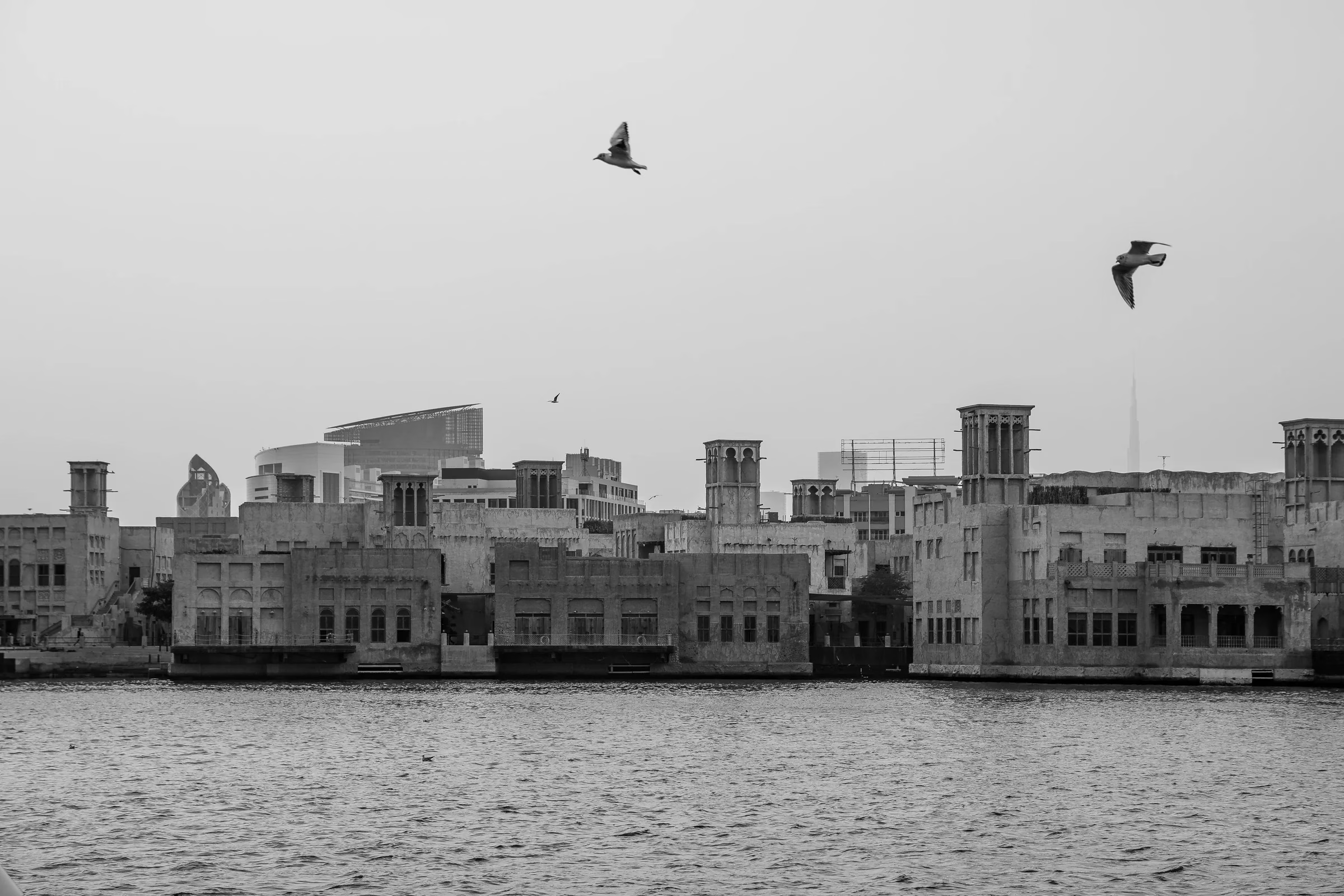
First, begin where the story begins, at the mouth of Dubai Creek. Al Shindagha is the old neighbourhood where the ruling family lived, and it is now Al Shindagha Museum, Dubai’s largest heritage museum. Its pavilions are spread across restored coral-stone houses with wind towers. One of the most important is the Al Maktoum Residence, the former home of Sheikh Saeed bin Maktoum Al Maktoum, Sheikh Rashid’s father and predecessor as Ruler.
Start at the house called Dubai Creek: Birth of a City, because it explains how the waterway shaped everything around it. Afterwards, wander the lanes towards the Perfume House and the Culture of the Sea Pavilion. The key details are:
- Opening hours: daily from 10am to 8pm, with last entry at 7pm, according to Al Shindagha Museum.
- Full museum ticket: AED 50 for adults, AED 40 per person for groups of five or more and AED 20 for full-time students aged 5 to 24, under Dubai Culture’s official price resolution.
- Free entry: children under five, visitors with disabilities and one escort, Emirati citizens aged 60 and over, and ICOM card holders.
- Getting there: Al Ghubaiba Metro Station on the Green Line and Al Ghubaiba Marine Station are a few minutes’ walk away. Roadworks on the Al Shindagha Corridor have moved some drop-off points, so check the museum website before you take a taxi.
If you would like to see more of old Dubai on foot, our guides to the Al Fahidi Historical Neighbourhood and Heritage Village make easy additions.
Stop 2: Cross Dubai Creek by Abra
Next, walk down to the water. Dubai Creek was Sheikh Rashid’s first great project. The National reports that British engineers recommended dredging a new channel to the sea, at a cost of about £388,000. At the time, that was a vast sum for a small town. Sheikh Rashid raised the money from local merchants, from customs revenue and from loans, and work began in 1959. As a result, larger ships could reach the wharves, new neighbourhoods spread out from the Creek and Dubai’s population surged.
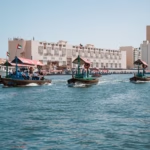
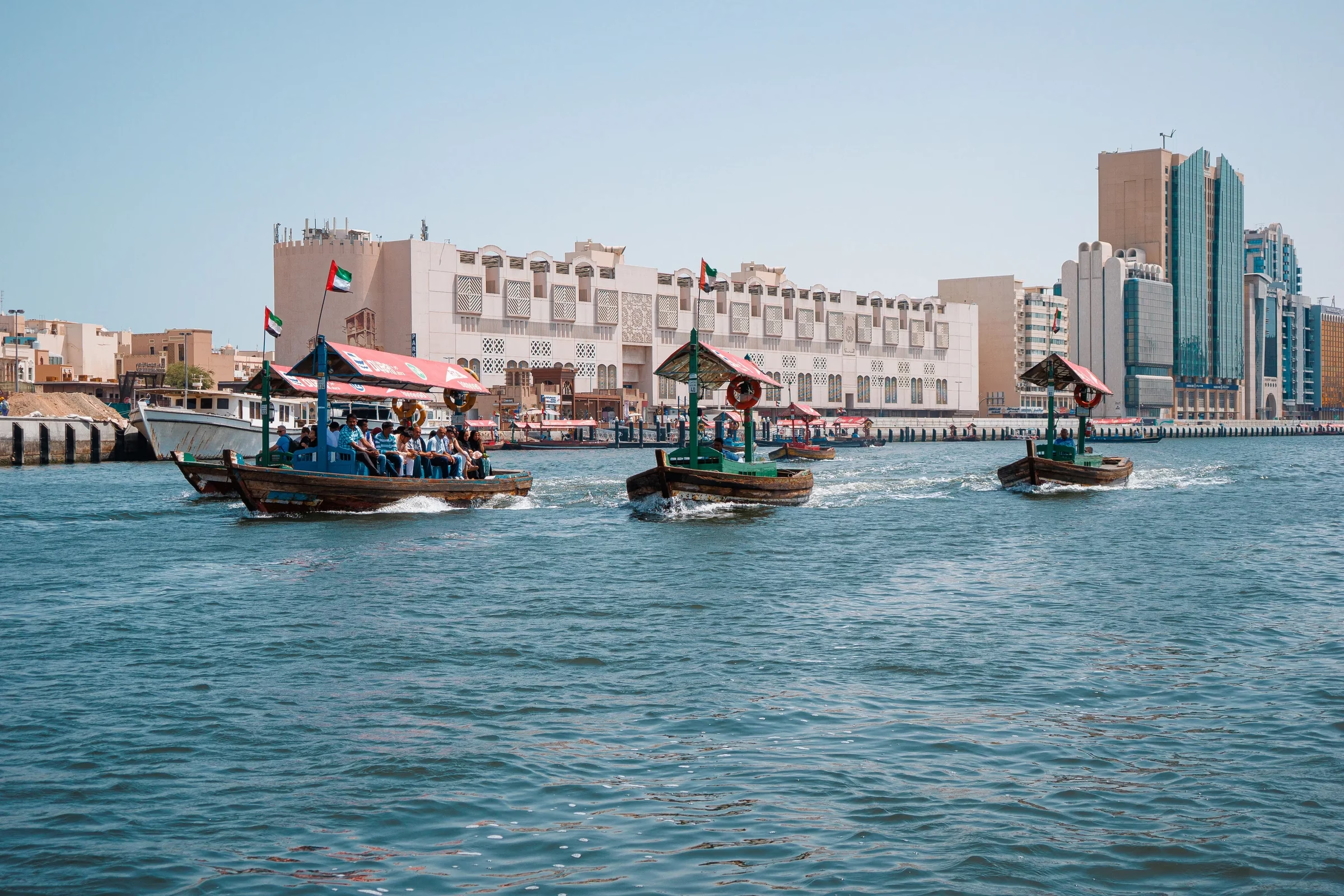
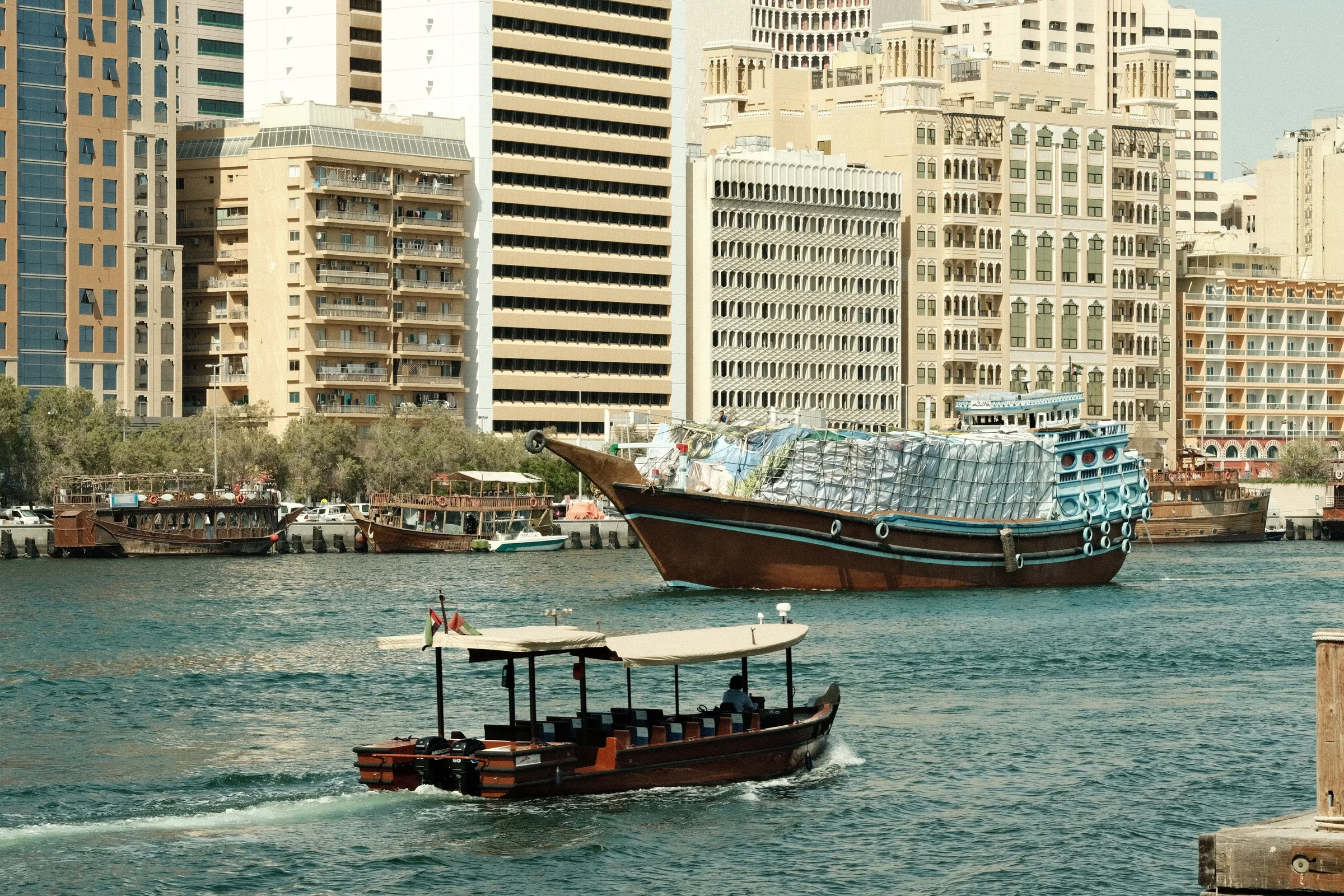
Today, the simplest way to feel that history is the traditional abra. These wooden water taxis have crossed the Creek for generations, and Gulf News calls them one of the city’s most beloved journeys. According to the RTA:
- The fare is AED 1 per passenger per trip, and you pay in cash on board.
- One route links Bur Dubai Abra Station with Deira Old Souq Abra Station, and it runs from 6am to midnight.
- Another links Dubai Old Souq Station with Al Sabkha Abra Station, and it runs around the clock.
- A private abra charter costs AED 120 per hour.
On the Deira side, step into the spice and textile souks before you cross back. Further upstream, look out for Al Maktoum Bridge. It opened in 1963 as the first road bridge across the Creek, ending the long journey around its head. Our Dubai Creek guide covers the waterfront in more detail.
Stop 3: Etihad Museum, the Heart of the Sheikh Rashid Heritage Trail
Now take a taxi south-west along the coast to Jumeira Street. Here, beside the sea, stands the most important building on the route. The Union House, known in Arabic as Dar Al Etihad, was part of Sheikh Rashid’s summer residence, then called Dar Al Dafiya, or Guest Residence. On 2 December 1971, the rulers of the emirates gathered at its round table to sign the declaration that created the UAE.
The restored building, its flagpole and the shoreline now form part of Etihad Museum, which opened to visitors in January 2017. Inside, meanwhile, galleries tell the story of the union between 1968 and 1974 through film, documents and interactive displays. The visitor details from Etihad Museum are:
- Opening hours: daily from 10am to 8pm, with last entry at 7pm.
- Guided tours: daily at 1pm, 3pm, 4pm and 5pm.
- Tickets: AED 25 for adults, AED 20 per person for groups of five or more and AED 10 for students. Children under five enter free.
- Address: Jumeira Street at the junction with 2nd December Street.
Stop 4: Sheikh Rashid Tower, the Heritage Trail’s Modern Finale
End the trail with a landmark that once seemed absurdly far from town. Sheikh Rashid Tower, the 39-storey heart of Dubai World Trade Centre, was designed by the British architect John Harris. According to The National, construction began in 1974 and Queen Elizabeth II inaugurated the 149-metre tower on 26 February 1979. On the same visit, she also opened Jebel Ali Port and Dubai Dry Docks.
At the time, the site beside the motorway to Abu Dhabi was considered far out of town. Nevertheless, the tower was the tallest building in the Arab world until Burj Al Arab overtook it. The UAE Ministry of Culture says the trade centre went on to host more than 5,000 business events by 2018. Since then, Sheikh Zayed Road’s skyscrapers have grown up all around it. The office tower is not a tourist attraction, so admire it from the street or from the Red Line of the Dubai Metro, which runs alongside.
Beyond the Trail: Port Rashid and Jebel Ali
Two of Sheikh Rashid’s biggest projects are working ports rather than visitor sites, but they explain modern Dubai better than any museum. Port Rashid opened in 1972, close to the mouth of the Creek, and the district is still known as Mina Rashid. Jebel Ali Port followed in 1979, and Khaleej Times records a string of industrial projects there in the same years. In addition, you will pass both areas on the drive along the coast, and they are a reminder that Dubai’s glamour rests on trade.
A One-Day Sheikh Rashid Heritage Trail Itinerary
The four stops fit comfortably into a single day, provided you start early and save the Creek for the cooler late afternoon. Here is a route that works well:
- 10am: Arrive at Etihad Museum as it opens, and join a guided tour later if the timing suits you.
- 1pm: Take a taxi to Al Shindagha for lunch near the Creek. Our guide to Emirati food suggests dishes to try.
- 2pm: Explore Al Shindagha Museum, allowing at least two hours.
- 5pm: Walk to the abra station and cross to Deira for the souks, then cross back as the light softens.
- Evening: Ride the Red Line past Sheikh Rashid Tower, or drive along Sheikh Zayed Road to see it lit up.
October is warmer than many visitors expect. Khaleej Times reported a forecast high of 38°C in Dubai today, while Gulf News reported a police fog warning for early-morning drivers. Therefore, carry water, wear comfortable shoes and keep a few one-dirham coins for the abra. For the rest of the month’s plans, see our Dubai October 2026 guide and our overview of Dubai culture.
Conclusion: Following the Compass on the Sheikh Rashid Heritage Trail
Sheikh Mohammed’s letter is a son’s tribute, yet it also works as a map. Every stop on this Sheikh Rashid heritage trail shows one of the qualities he praises: the patience to dredge a creek, the vision to build a tower in the sand and the diplomacy to host the signing of a union. Spend a day following that route and the modern city starts to make sense. Above all, you will see that Dubai’s story did not begin with its skyscrapers. It began with a shallow creek, a small compass and a Ruler who toured his building sites twice a day.
FAQ
Why is Sheikh Rashid trending in Dubai today?
Sheikh Mohammed bin Rashid Al Maktoum published “A Letter to My Father” to mark the anniversary of Sheikh Rashid’s death. Gulf News covered the tribute, and Sheikh Rashid’s name trended in Dubai on X.
When did Sheikh Rashid die?
Sheikh Rashid bin Saeed Al Maktoum died on 7 October 1990. He had ruled Dubai since 1958.
What is on the Sheikh Rashid heritage trail?
This guide links Al Shindagha Museum, an abra crossing of Dubai Creek, Etihad Museum and Union House, and Sheikh Rashid Tower at Dubai World Trade Centre. You can see all four in one day.
How much does Al Shindagha Museum cost?
A full museum ticket costs AED 50 for adults and AED 20 for full-time students aged 5 to 24. Children under five enter free, and the museum opens daily from 10am to 8pm.
Can you visit the Union House where the UAE was founded?
Yes. The Union House is part of Etihad Museum on Jumeira Street. Adult tickets cost AED 25, and guided tours run at 1pm, 3pm, 4pm and 5pm.
How much is an abra ride across Dubai Creek?
A traditional abra costs AED 1 per passenger per trip, paid in cash. Alternatively, a private charter costs AED 120 per hour.
How long does the Sheikh Rashid heritage trail take?
Allow a full day. Etihad Museum needs about two hours, Al Shindagha Museum at least two more, and the abra crossings and souks fill the late afternoon.
Key Takeaways
- Sheikh Mohammed’s “A Letter to My Father” marked the anniversary of Sheikh Rashid’s death and sent his name trending in Dubai.
- Sheikh Rashid ruled Dubai from 1958 until 7 October 1990, and he transformed a shallow creek town into a global port city.
- Al Shindagha Museum, home to the Al Maktoum Residence, opens daily from 10am to 8pm, and adult tickets cost AED 50.
- An abra across Dubai Creek costs AED 1 in cash, on the waterway Sheikh Rashid had dredged from 1959.
- The Union House at Etihad Museum, once part of Sheikh Rashid’s summer residence, is where the UAE was founded in 1971.
- Sheikh Rashid Tower at Dubai World Trade Centre was inaugurated by Queen Elizabeth II in 1979.
- The English edition of Sheikh Mohammed’s book “The Letters” is due on 15 October.
Useful Links
- Gulf News: Sheikh Mohammed pays moving tribute to father Sheikh Rashid (6 Oct 2026)
- Sheikh Mohammed on X: A Letter to My Father (Arabic)
- Khaleej Times: Sheikh Mohammed shares lessons from his late father (2025 anniversary)
- Khaleej Times: 10 important things to know about Sheikh Rashid
- Gulf News: Sheikh Mohammed’s letter to Sheikh Zayed and the book “The Letters”
- Al Shindagha Museum: Plan your visit
- Etihad Museum: Plan your visit
- RTA: Abra routes and fares
- Gulf News: How to take a Dh1 abra ride between Deira and Bur Dubai
- Travel to Dubai Blog: The history of Dubai
- Travel to Dubai Blog: Dubai Creek
Featured photo: traditional abras on Dubai Creek, Pexels.