Five square metres is roughly the floor space of a single bed and a small desk. From today, it is also the benchmark every flat-sharer in the city should know, because it is the minimum bedroom space each person must have under the new Dubai shared accommodation rules.
This morning, Gulf News and Khaleej Times reported the technical requirements that Dubai Municipality has set out under the shared housing law. The headline change is simple: families and individuals can no longer live in the same shared unit. However, the details matter just as much, from bathroom ratios to the main roads where single residents may no longer share. This guide explains what the rules say, who they affect and what to check before you sign for a room.
What the New Dubai Shared Accommodation Rules Say
The requirements sit under Law No. 4 of 2026, which regulates how shared housing is occupied and managed. Sheikh Mohammed bin Rashid Al Maktoum issued the law in March, according to the Dubai Media Office. It then took effect on 26 August, 180 days after it appeared in the Official Gazette, as Gulf News reported at the time.
Today’s detail comes from Dubai Municipality Circular No. 1-3-1 of 2026. According to Gulf News, the circular sets out 10 obligations for building and villa owners, engineering consultancies and contracting companies. In other words, most of the legal duties fall on owners and operators. Nevertheless, tenants are the people who live with the results, so it pays to understand them.
If you would like the background first, our earlier guide to shared housing in Dubai covers the 2,395 violations the Municipality recorded this year and your rights as a tenant.
Families or Individuals: One Category per Property
The biggest change under the Dubai shared accommodation rules is separation. Gulf News reports that each shared unit must now serve either families or individuals, never both. In addition, the Municipality wants owners to designate a whole building or villa for shared housing, rather than just part of it, and each building or villa must serve only one of the two groups.
Families can still share a home with other families. More than one family may live in a unit designated for family accommodation, provided each family has its own bedroom. Each of those bedrooms must also have a private bathroom.
Individuals have more flexibility inside the unit. Several people may share a bedroom, subject to the approved maximum occupancy and to health and technical requirements. Owners may also turn a living room into a bedroom, which is a common arrangement in city flats today.
Space and Bathroom Rules for Dubai Shared Accommodation
The technical guidelines are precise, and they are worth measuring against any room you are offered. According to Khaleej Times and Gulf News, the key requirements are:
- Bedroom space: at least five square metres per occupant.
- Kitchens inside apartments: at least one square metre per occupant, in line with the Dubai Building Code.
- Kitchens in new buildings for individuals: owners may provide shared kitchens on each floor, sized for the number of residents.
- Complete bathrooms: at least one washbasin, toilet and shower for every four occupants, in both family and individual housing.
- Separate toilets and showers: at least one toilet for every four occupants and one shower for every six. Only accommodation for individuals may use this layout.
- Shared spaces: buildings for individuals must provide multipurpose halls for dining and recreation, as well as laundry and drying facilities.
Here is a quick way to use those numbers. A three-bedroom flat shared by eight people needs at least two complete bathrooms, and each bedroom must offer five square metres for every person sleeping in it. If a listing squeezes four people into a small room with one bathroom for the whole flat, it is unlikely to meet the standard.
The Main Roads Where Individuals Cannot Share
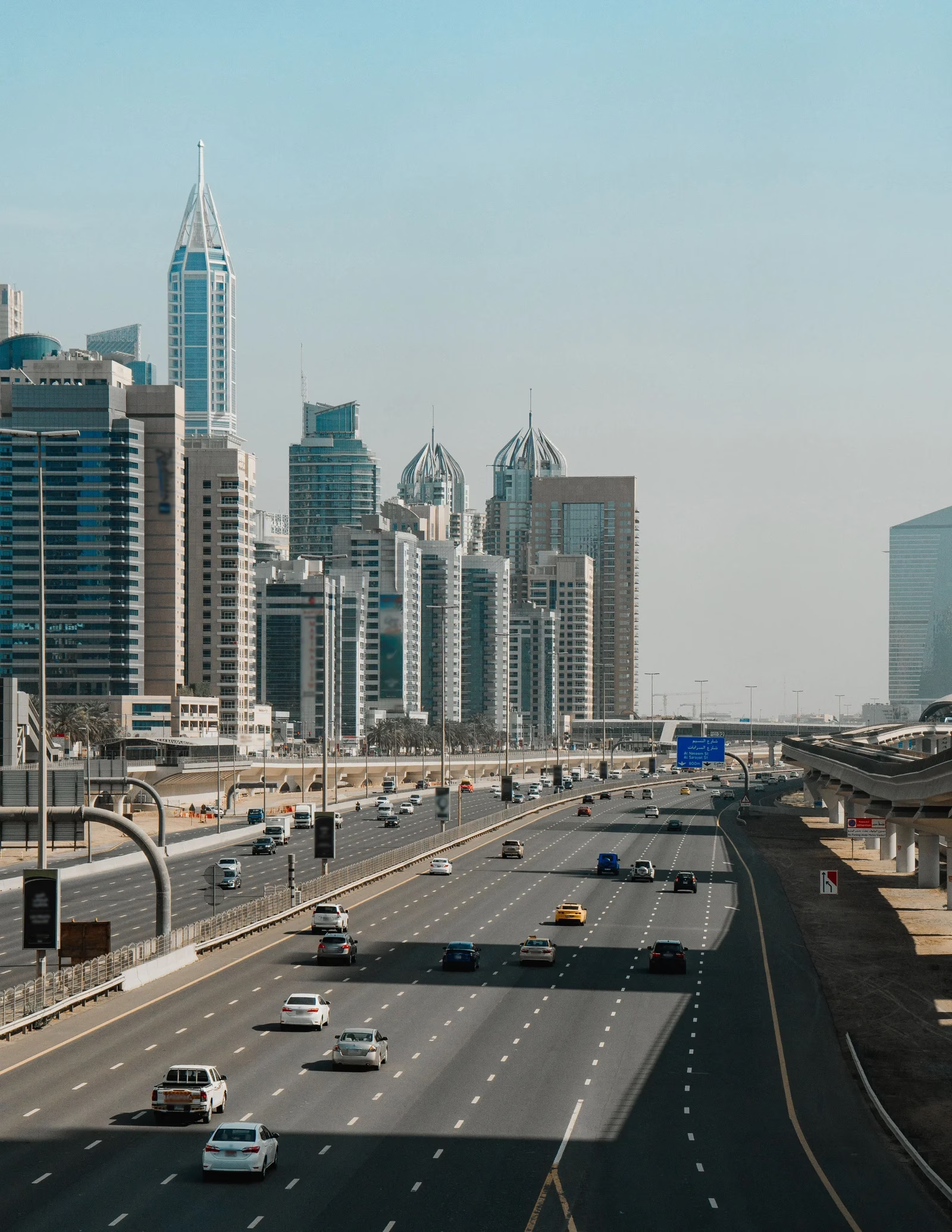
For many renters, the location rule will be the real surprise. Gulf News reports that the Municipality has banned individuals from sharing accommodation on major roads with a tourism or commercial character. The roads named so far include:
- Baniyas Road, which runs along the Deira side of Dubai Creek;
- Sheikh Zayed Road, the city’s main highway;
- Jumeirah Road, along the coast;
- Al Wasl Road, which runs inland, parallel to Jumeirah Road.
In those locations, only families will be able to live in shared housing. As a result, if you share a flat with friends or colleagues in a building on one of these roads, ask your landlord how the Municipality classifies the building. More broadly, the Municipality says it will limit shared housing to designated areas, so the map of where flat-sharing is legal is likely to become clearer over the coming months.
Our neighbourhood guides to Al Barsha 1 and Downtown Dubai can help if you are weighing up where to live.
What Owners Must Do: Permits, Plans and Parking
No one may designate a property for shared housing without a permit, as the Dubai Media Office explained when the law was issued. Today’s circular adds the practical steps, which Gulf News sets out:
- Owners need a building permit for shared accommodation, whether for a new building or for changes to an existing building or villa.
- The owner’s engineering consultancy must submit licence, completion and shared-housing permit applications through the Dubai Building Platform.
- Applications must include plans of the buildings, apartments and rooms, their sizes, the categories of occupants and the occupancy rates.
- The Municipality issues the shared-housing permit after a completion certificate, and the permit carries the information the Dubai Land Department needs for tenancy contracts.
- Fees apply to requests to convert a building, or part of one, into shared accommodation.
Transport gets its own rules, too. Shared accommodation does not have to meet minimum car-parking requirements. Instead, owners must provide areas where minibuses can pick up and drop off residents, subject to approval from the Roads and Transport Authority. Buildings must also offer bicycle parking for at least 10 per cent of their occupants. Meanwhile, owners may rent out private villas, and villas in approved areas, as shared accommodation if they meet the planning and construction standards.
Deadlines and Fines Under the Dubai Shared Accommodation Rules
Existing shared properties have time to adjust. Gulf News reports that owners and businesses have one year from 26 August 2026 to comply, and the Municipality’s director-general may extend that deadline once. However, the grace period does not cover building violations or unauthorised changes of use. The Municipality says owners must remove those to protect lives and property.
The penalties are serious. Fines range from Dh500 to Dh500,000, and authorities can double the fine for a repeat offence within a year, up to Dh1 million. Authorities can also suspend operators, revoke permits, disconnect utilities and refuse to register tenancy contracts for offending units.
There is reassurance for residents, though. Under the law, the suspension of an operator or the cancellation of a permit does not automatically mean tenants must leave at once. Authorities can allow occupants to stay for a set period so that they have time to find somewhere else.
What to Check Before You Rent a Room in Dubai
Most of the legal duties fall on landlords, but a few minutes of checking can save you a stressful move later. Before you hand over a deposit, work through this list:
- Ask whether the building or villa has a shared-housing permit, and whether the tenancy contract will be registered.
- Rent only from the owner or a licensed operator. The law bans occupants from subletting their accommodation or any part of it.
- Measure the bedroom and divide by the number of people who will sleep in it. You should get at least five square metres each.
- Count the bathrooms. You need at least one complete bathroom for every four residents.
- Check whether the building is for families or for individuals, and make sure you fit that category.
- If the building is on Baniyas Road, Sheikh Zayed Road, Jumeirah Road or Al Wasl Road, confirm that individuals can legally share there.
- Keep copies of your contract, receipts and any messages with the landlord.
For more on renting legally, Gulf News has a useful explainer on subletting and apartment-sharing. If you are new to the city, our guides to the Dubai residence visa and banking in Dubai cover the other paperwork you will need.
Why the Rules Matter for Dubai’s Rental Market
Flat-sharing exists because rents are high, and the market shows little sign of cooling. Today, Arabian Business reported that Dubai’s rental market is heading for a record year, with a ranking of the top 10 areas. Consequently, the new standards may push some room rents up in the short term, especially where landlords must remove partitions or add bathrooms.
At the same time, the law aims to curb overcrowding, reduce safety risks and preserve the look of residential neighbourhoods, according to Gulf News. For tenants, that should mean safer and better-run homes. For owners and investors, it creates a clear, licensed route into shared housing. Our guide to investing in Dubai looks at the wider property picture.
Conclusion: Renting Within the Dubai Shared Accommodation Rules
The Dubai shared accommodation rules turn a grey area into a regulated part of the housing market. The essentials are easy to remember: one category per property, five square metres per person, one bathroom for every four residents and no individual flat-sharing on the city’s best-known main roads. Owners have until August 2027 to comply. Tenants, on the other hand, can start using these numbers today, every time they view a room. Above all, rent from the owner or a licensed operator, and keep your paperwork in order. Like the values in our guide to seven rules for life in Dubai, these rules reward people who plan ahead.
FAQ
What are the new Dubai shared accommodation rules?
Dubai Municipality requires at least five square metres of bedroom space per person and one complete bathroom for every four residents. Families and individuals may not share the same unit, and each building or villa must serve one group only.
Can families and single people share a flat in Dubai?
No. Under the new requirements, each shared unit must serve either families or individuals. However, two or more families may share a unit if each has its own bedroom with a private bathroom.
Which roads ban shared housing for individuals?
Gulf News reports that the named roads include Baniyas Road, Sheikh Zayed Road, Jumeirah Road and Al Wasl Road. On those roads, only families may live in shared housing.
When do owners have to comply?
Existing shared properties have one year from 26 August 2026, when the law took effect. The Municipality may extend the deadline once. The grace period does not cover building violations or unauthorised changes of use.
What are the fines for breaking the shared housing law?
Fines range from Dh500 to Dh500,000. Authorities can double the fine for a repeat offence within a year, up to a maximum of Dh1 million.
Do the Dubai shared accommodation rules allow subletting?
No. The law allows only owners and licensed establishments to rent out approved shared units. Occupants are not allowed to sublet their accommodation or any part of it.
Key Takeaways
- Dubai Municipality has published the technical requirements for shared housing under Law No. 4 of 2026.
- Families and individuals may no longer live in the same shared unit, and each building or villa must serve one group.
- Every occupant needs at least five square metres of bedroom space, and every four residents need a complete bathroom.
- Shared accommodation for individuals is barred on main roads including Baniyas Road, Sheikh Zayed Road, Jumeirah Road and Al Wasl Road.
- Owners need a shared-housing permit, applied for through the Dubai Building Platform.
- Existing properties have until 26 August 2027 to comply, and fines reach Dh1 million for repeat offences.
- Tenants should rent only from owners or licensed operators, as subletting is banned.
Useful Links
- Gulf News: Dubai bans mixing families and individuals in shared housing units (7 Oct 2026)
- Khaleej Times: Dubai shared accommodation space, bathroom and kitchen rules (7 Oct 2026)
- Gulf News: Dubai’s shared housing law takes effect, with fines of up to Dh1 million
- Dubai Media Office: Mohammed bin Rashid issues the shared housing law
- Arabian Business: Dubai rents and the top 10 areas (7 Oct 2026)
- Gulf News: Dubai’s subletting and apartment-sharing rules
- Dubai Municipality
- Dubai Land Department
- Travel to Dubai Blog: Shared housing Dubai rules and tenant rights
- Travel to Dubai Blog: Getting around on the Dubai Metro
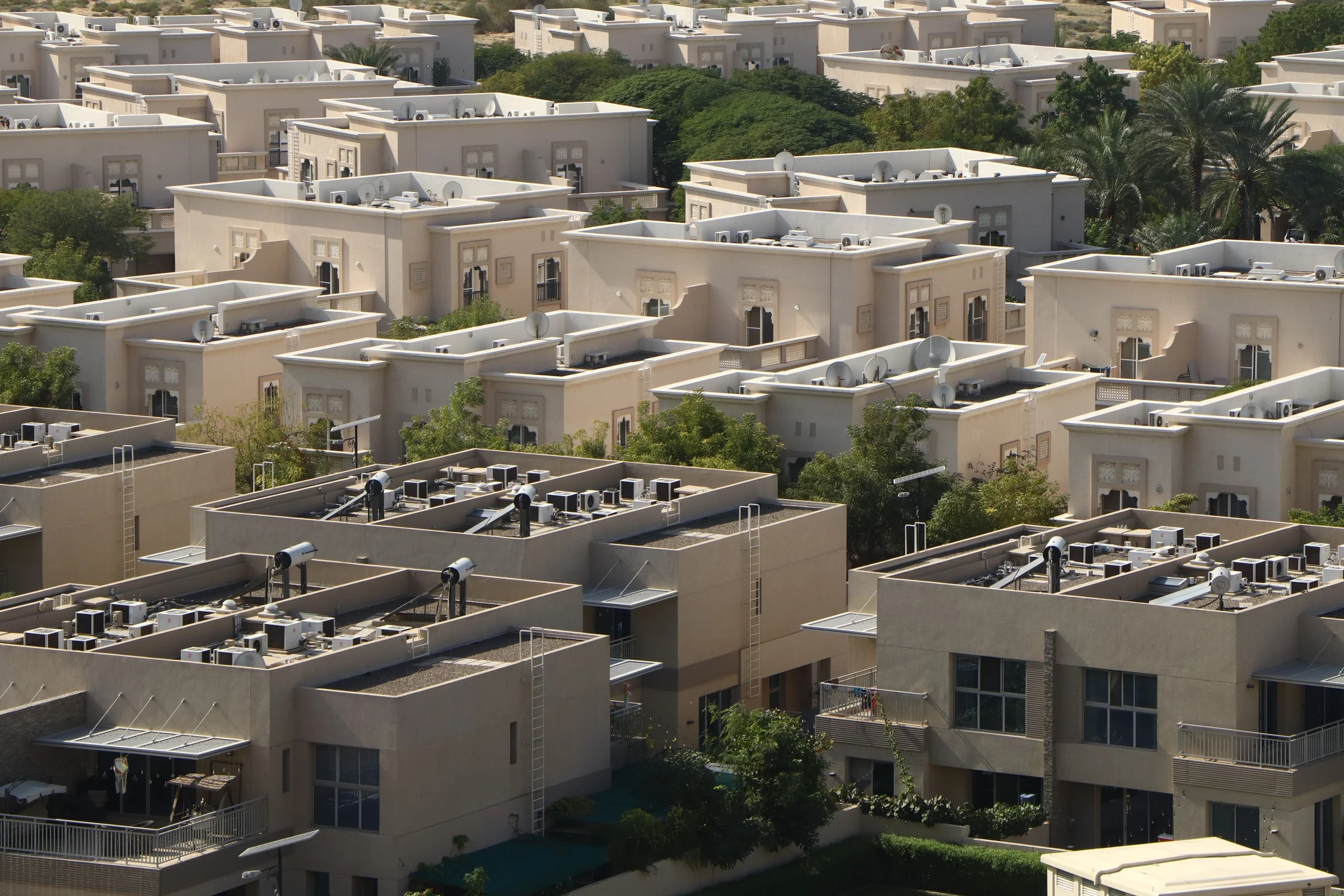
Featured photo: villas in a Dubai residential community, Subbu Rayan, Pexels.