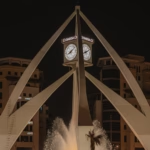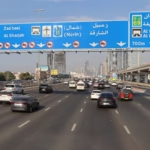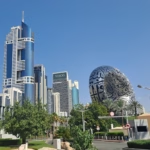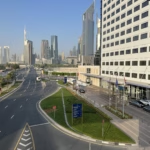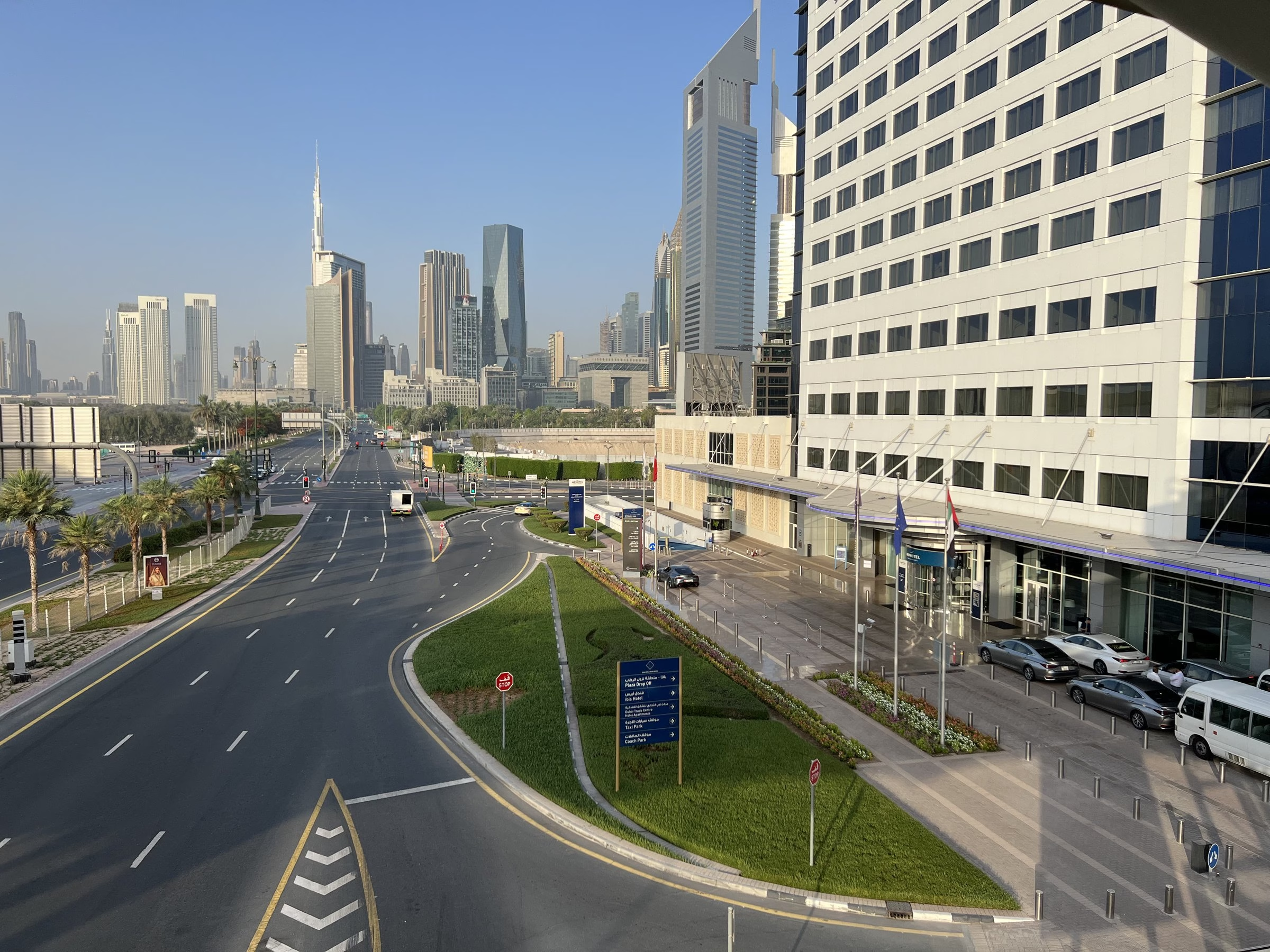
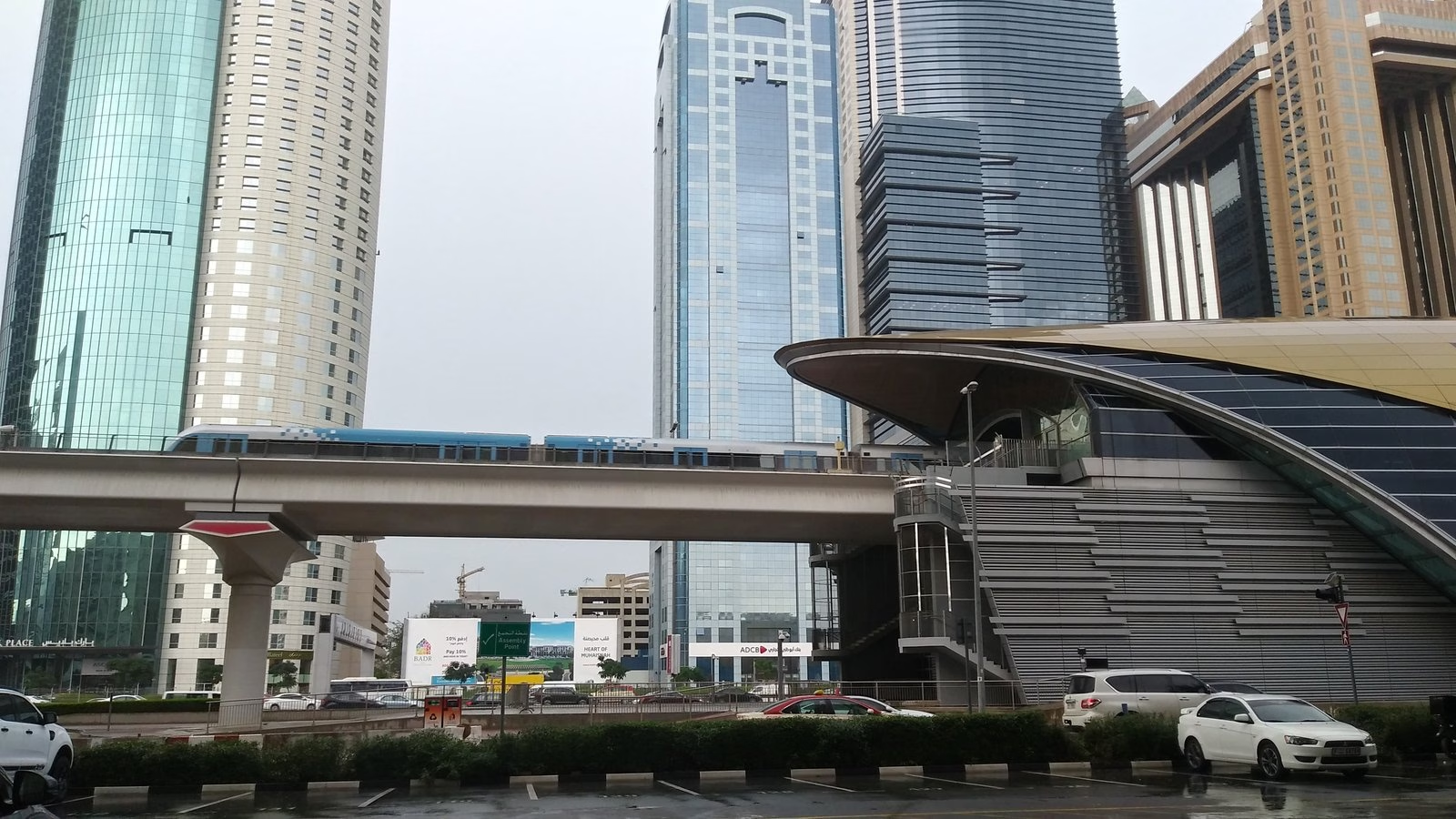
The roads beside Dubai World Trade Centre, with the Sheikh Zayed Road skyline beyond (photographed in 2023, before the final bridge opened). Photo: Hawkeye7, Wikimedia Commons, “Dubai World Trade Centre and skyline”, CC BY-SA 4.0 (resized).
For decades, the roundabout outside Dubai World Trade Centre was where journeys slowed to a crawl. Commuters from Satwa, taxis from Deira and exhibition crowds all squeezed onto the same ring of tarmac. As of Friday 30 October 2026, that bottleneck is history. The Roads and Transport Authority (RTA) has opened the fifth and final World Trade Centre bridge, completing a project worth more than Dh696 million.
First, the headline promise is simple. According to the RTA, the average delay at the intersection should fall from about 12 minutes to roughly 90 seconds. However, the new layout looks nothing like the junction many drivers remember. This guide explains what has opened, which roads each bridge links, and how to drive through without missing your exit. It also covers the easier option for visitors: leaving the car behind altogether.
What Opened on 30 October?
The last piece of the puzzle is a 1,000-metre, two-lane bridge. It carries traffic from Al Majlis Street towards 2nd December Street, and it can handle about 3,000 vehicles an hour. As a result, the RTA says a trip between those two streets drops from six minutes to one.
With this opening, the authority has finished all the major works under the World Trade Centre Roundabout Development Project. In total, the scheme has added five bridges with a combined length of 5,000 metres. Meanwhile, the old oval roundabout has gone. In its place is a surface-level intersection, with the bridges carrying through traffic over the top.
The Five Bridges at a Glance
The five World Trade Centre bridges fall into three groups. Each one separates a different flow of traffic, so cars no longer converge on a single circle. Here is how they work, according to the RTA figures reported by Khaleej Times and Gulf News:
- Sheikh Zayed Road to Sheikh Khalifa bin Zayed Street: a 1,000-metre, two-lane bridge for drivers heading towards Deira, with capacity for about 3,000 vehicles an hour.
- Sheikh Rashid Street to 2nd December Street: two bridges with a combined length of 2,000 metres. They offer two lanes in each direction and carry up to 6,000 vehicles an hour.
- Al Majlis Street to 2nd December Street: two more bridges, also 2,000 metres in total, with about 6,000 vehicles an hour of capacity. Friday’s opening completes this pair.
In practice, the Sheikh Rashid Street link matters most for traffic moving between Deira, Al Satwa and Jumeirah. By contrast, the Al Majlis Street link suits drivers travelling between Satwa or Jumeirah and the Trade Centre district. Al Majlis Street then continues to Al Mustaqbal Street, which serves Dubai World Trade Centre and Dubai International Financial Centre (DIFC).
Who Benefits From the World Trade Centre Bridge?
The RTA says the project will serve more than 500,000 residents and visitors. Neighbourhoods on its doorstep include Za’abeel, Al Satwa, Al Karama, Al Jafiliya and Al Mankhool. For residents there, the school run and the commute to DIFC should both become more predictable.
Visitors also gain. Dubai World Trade Centre hosts some of the city’s biggest shows, including GITEX, Arabian Travel Market and Gulfood. On a busy exhibition morning, the old roundabout could add a frustrating quarter of an hour to a taxi ride. Moreover, Gulf News reports that Dubai will host 20 major global exhibitions and events in November alone. For anyone with a stand, a meeting or a ticket, the new World Trade Centre bridge arrives at a useful moment.
How to Drive Through the New Junction
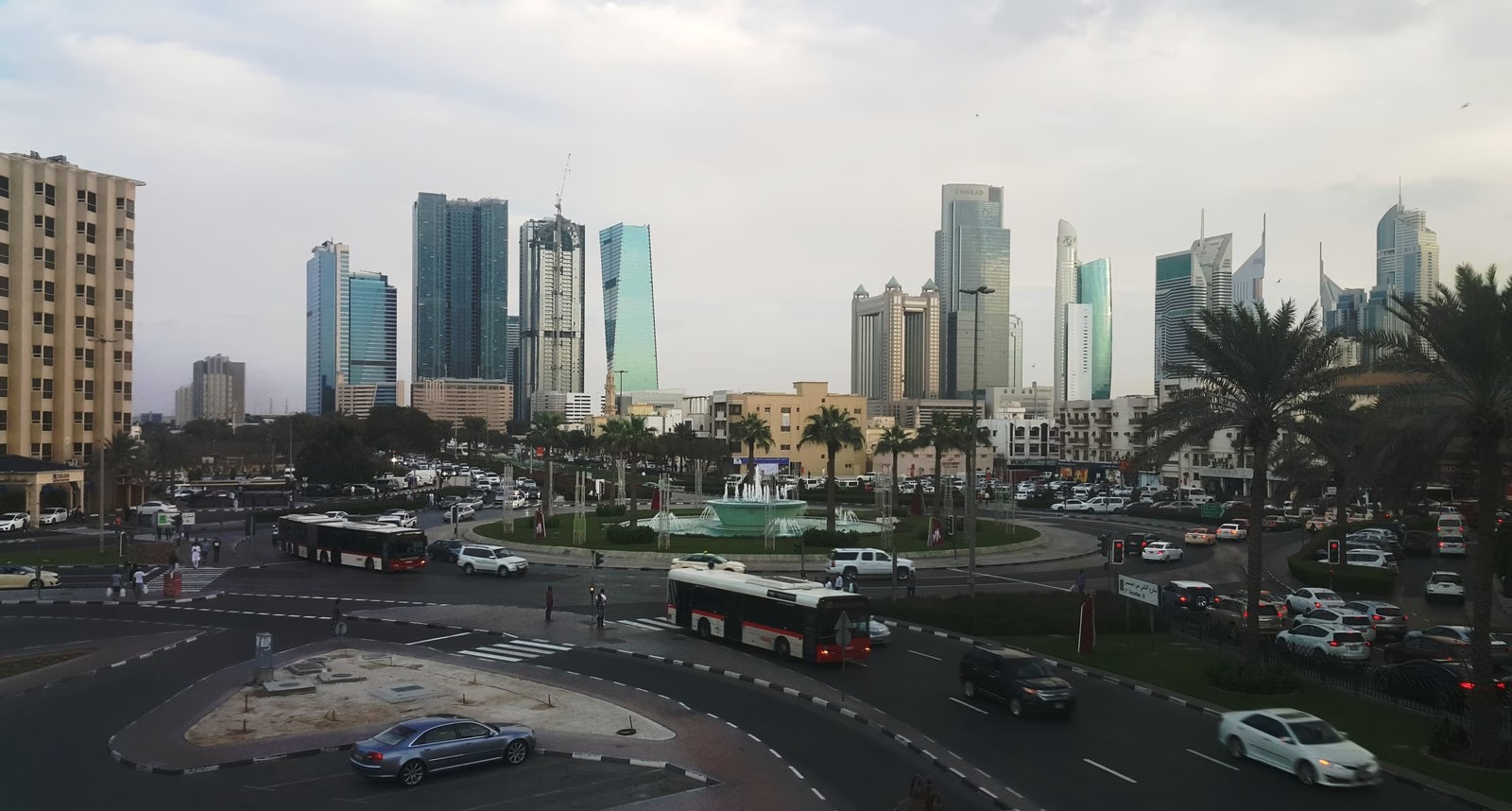
The roads may be new; however, the main risk is old habits. Khaleej Times drove the junction before the final opening and found no trace of the former roundabout. Instead, there is a network of flyovers, lane splits and exits on several levels. Regular drivers told the paper that the signs are clear, yet you must read them early. If you leave it late, you may end up on a different exit.
These habits will help in the first few weeks:
- Decide your exit before you set off, and check the latest route in your map app.
- Watch the overhead signs well before the junction, because traffic now separates much earlier than it used to.
- Move into the correct lane in good time, and avoid sudden lane changes near the splits.
- If you miss your exit, carry on and let your navigation reroute you. Never stop or reverse on a slip road.
- Allow a little extra time during your first few trips, until the layout feels familiar.
There is also one more change nearby. From Sunday 1 November, the speed limit on a section of Al Mustaqbal Street rises by 10 km/h. Our guide to the new Dubai speed limits sets out all five roads affected and the fines that apply.
Sunday Morning: Dubai Ride Comes First
Before you try the new junction this weekend, note one important date. On Sunday 1 November, Dubai Ride takes over Sheikh Zayed Road in the early morning, and its 12km route starts from Dubai World Trade Centre. According to the RTA, the roads reopen at around 8.15am. Therefore, if you are driving through the Trade Centre area that morning, plan to set off after the ride. Our Dubai Ride 2026 guide has the routes, car parks and timings.
Prefer Not to Drive? Take the Metro
For most visitors, the simplest way to reach Dubai World Trade Centre is still the Dubai Metro. World Trade Centre Station sits on the Red Line beside Sheikh Zayed Road, a short walk from the exhibition halls. Even with the new bridges, the metro avoids parking queues on a big show day. In addition, it links directly to Downtown Dubai, Dubai Marina and Deira.
You will need a Nol card to ride, and you can top it up at any station. If you travel with a wheelchair or a pushchair, our accessible Dubai guide explains the lifts, tactile paths and other help available at stations. Taxis also remain plentiful around the Trade Centre, and they should now spend far less time waiting at the junction.
What Comes Next: Al Mustaqbal Street
The roundabout project is finished. Even so, work in the district is not. Next door, the RTA is upgrading Al Mustaqbal Street between Za’abeel Palace Street and Financial Centre Street. The scheme is due for completion in 2027.
According to Khaleej Times, the plans include three tunnels with a combined length of 1,100 metres at the junction with Trade Centre Street. There will also be a 400-metre, two-lane bridge for traffic heading from the Trade Centre towards Za’abeel Palace Street. In addition, a 3,500-metre stretch will widen from three to four lanes in each direction. The RTA says capacity will rise by 33 per cent, from 9,000 to 12,000 vehicles an hour. Expect some roadworks and diversions around DIFC until then. For the bigger picture, see our overview of what Dubai is building now.
What Gulf News, Khaleej Times and Arabian Business Reported
Notably, all three papers covered the World Trade Centre bridge this week. Gulf News previewed the opening on 25 October and updated its explainer this morning, listing the roads connected, the travel-time savings and the follow-on Al Mustaqbal Street project. Khaleej Times published its report at 10.40am today, including a drive through the new layout and interviews with regular commuters.
Arabian Business reported on 29 October that the final bridge was set to open, describing it as the last piece of the jigsaw. It also put the project’s cost at about $189 million, or Dh696 million. In fact, the papers agree on the key numbers: five bridges, 5,000 metres of new road and an average delay cut to 90 seconds.
Conclusion
In short, Dubai has quietly retired one of its most familiar traffic headaches. The final World Trade Centre bridge completes a junction designed to keep traffic moving between Sheikh Zayed Road, Deira, Satwa, Jumeirah and DIFC. For drivers, the next fortnight is about learning new exits and reading signs early. For visitors heading to an exhibition, the metro remains the stress-free choice. Either way, getting in and out of the Trade Centre district should be noticeably easier from today.
Frequently Asked Questions
When did the final World Trade Centre bridge open?
It opened on Friday 30 October 2026. In other words, it is the fifth and final bridge of the RTA’s World Trade Centre Roundabout Development Project.
Which roads does the new bridge connect?
The final bridge is a 1,000-metre, two-lane link from Al Majlis Street towards 2nd December Street. The RTA says it cuts that journey from six minutes to one.
Is the World Trade Centre roundabout still there?
No. The roundabout has been replaced by a surface-level intersection, with five bridges carrying traffic in different directions.
How much time will drivers save?
The RTA expects the average delay at the intersection to fall from 12 minutes to about 90 seconds.
What is the easiest way to reach Dubai World Trade Centre without a car?
Instead of driving, take the Dubai Metro Red Line to World Trade Centre Station. It stands beside Sheikh Zayed Road, close to the exhibition halls.
Key Takeaways
- The fifth and final World Trade Centre bridge opened on Friday 30 October 2026.
- The Dh696 million project replaced the roundabout with an intersection and five bridges totalling 5,000 metres.
- The RTA expects average delays to drop from 12 minutes to about 90 seconds.
- Drivers should read the signs early and choose their lane well before the junction.
- Dubai Ride closes nearby roads on the morning of Sunday 1 November until around 8.15am.
- The Al Mustaqbal Street upgrade nearby is due for completion in 2027.
Useful Links
- Khaleej Times: Final bridge at Dubai’s DWTC opens
- Gulf News: Dubai’s new World Trade Centre bridge opens today
- Arabian Business: Dubai World Trade Centre’s final bridge set to open
- Khaleej Times: Final bridge of the World Trade Centre roundabout project to open on 30 October
- Roads and Transport Authority (RTA)
- Dubai speed limits change on 1 November
- Dubai Ride 2026: routes, parking and timings