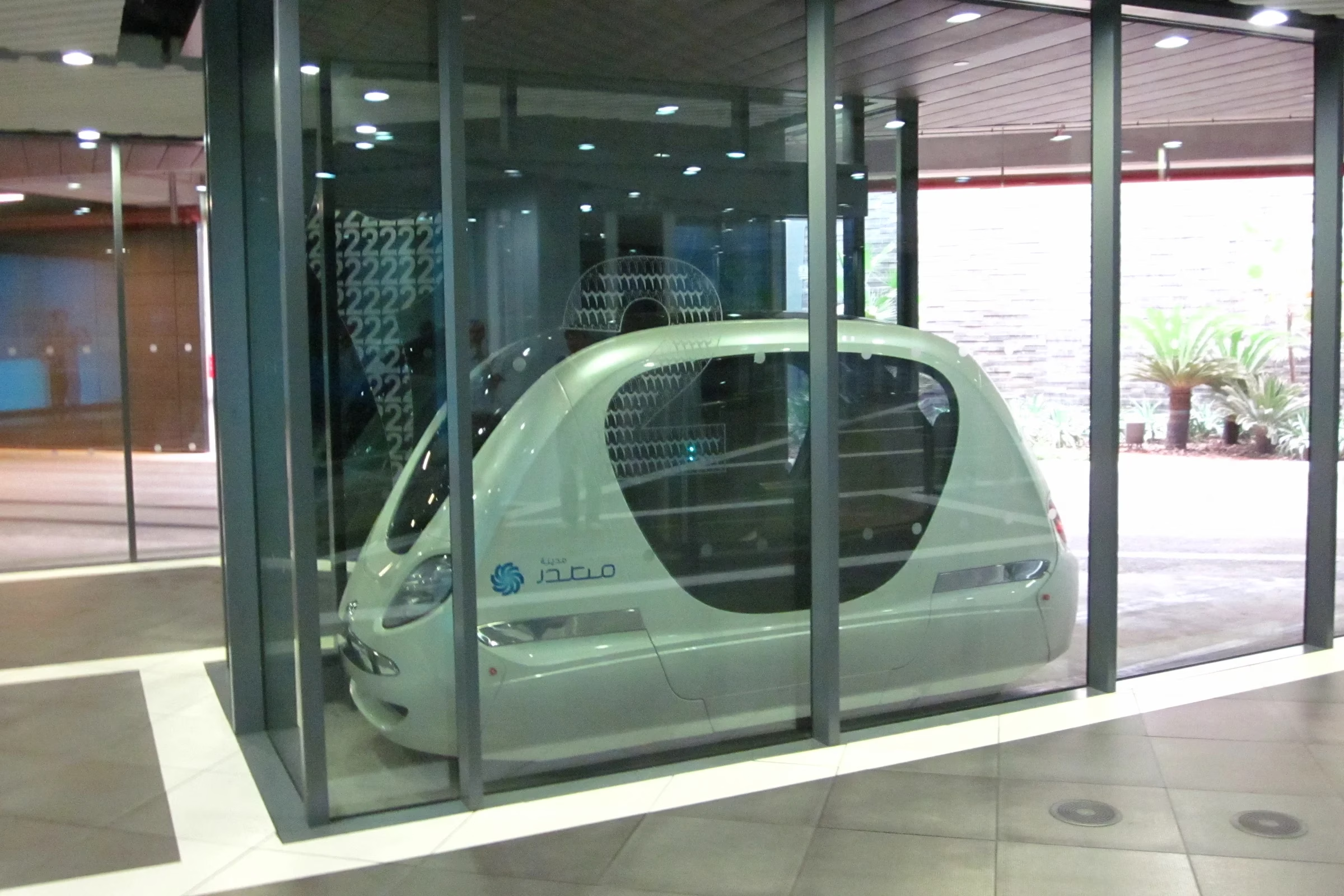
Every Dubai commuter knows the awkward gap between the Metro platform and the front door. The train is quick, cool and punctual, but the last kilometre is often a hot walk, a wait for a feeder bus or a short taxi ride that costs more than the journey before it. This morning, the Roads and Transport Authority (RTA) began testing a new answer to that problem on Bluewaters Island: Dubai driverless pods.
The pods, built by the American company Glydways, are now running a four-week trial on a dedicated guideway at Bluewaters. This guide explains how the system works, what the trial will measure, which Metro links the RTA is studying and, just as importantly, what it means for residents and visitors today. It draws on the official Dubai Media Office announcement and on same-day reports from Gulf News and Khaleej Times.
Dubai Driverless Pods at a Glance
Here are the confirmed facts from the launch on Sunday 11 October 2026:
- What: a trial of the Dubai Glydways automated transit system, using small electric pods guided by artificial intelligence.
- Where: a designated route on Bluewaters, the island destination run by Dubai Holding, off the coast of JBR.
- How long: four weeks from 11 October, so the trial runs into early November.
- Capacity: four to six passengers per pod, with speeds of up to 50km/h.
- Range: up to 250km on a single battery charge.
- Partners: the RTA, Glydways and Dubai Holding, which is providing the test site, infrastructure and operational support.
Mattar Al Tayer, the RTA’s Director General and Chairman of the Board of Executive Directors, opened the trial with a five-minute ride along the route. Before boarding, he toured the control centre and heard from Glydways founder and co-CEO Mark Seeger and co-CEO and chief technology officer Blake Barber.
How Dubai Driverless Pods Work
The idea is simple, even if the technology is not. Instead of sharing the road with cars, the pods travel on narrow, dedicated guideways. Engineers can lay these lightweight tracks at ground level or raise them on supports, which makes them far easier to squeeze into an existing neighbourhood than a new rail line.
Unlike a bus, a pod does not follow a timetable or stop at every station. Passengers request a vehicle on demand, and it carries them directly from their departure point to their destination. The RTA says the service will run around the clock, and riders will even be able to adjust the air conditioning and in-vehicle entertainment.
According to the official announcement, the key specifications are as follows:
- Each pod uses 20 high-resolution LiDAR sensors, together with radar and high-definition cameras.
- The system can link more than 10 pods virtually, travelling less than one second apart.
- The network aims to carry more than 20,000 passengers per hour in both directions.
- Capital costs could be up to 90 per cent lower, and operating costs up to 70 per cent lower, than comparable transport modes.
- The project follows a public-private partnership model, drawing on private-sector expertise.
That capacity figure matters. It suggests the RTA sees Dubai driverless pods not as a novelty shuttle, but as a way to combine the comfort of a small car with the volume of a mass transit line.
What the Dubai Driverless Pods Trial Will Test
A trial is exactly that: a test, not a launch. Over four weeks, the RTA will check whether the vehicles and their systems perform safely in a real operating environment. In particular, it will assess:
- the autonomous driving, sensing, communication and control systems;
- safety and reliability levels across the route;
- journey times and ease of use;
- how efficiently vehicles are managed along the guideway; and
- the overall passenger experience.
The data will then shape any decision on expansion. In other words, the four weeks at Bluewaters are the first step in a longer process that began when the RTA and Glydways signed a cooperation agreement at the World Governments Summit in 2025.
Where Dubai Driverless Pods Could Go Next
The real promise lies beyond the island. The project’s main goal is to solve first- and last-mile journeys by linking Metro stations with homes, offices and attractions. The RTA is studying several possible routes:
- a 2.8km link between National Paints Metro Station and Bluewaters;
- Jumeirah Village Circle (JVC);
- Dubai Festival City;
- Business Bay; and
- Mohammed Bin Rashid City.
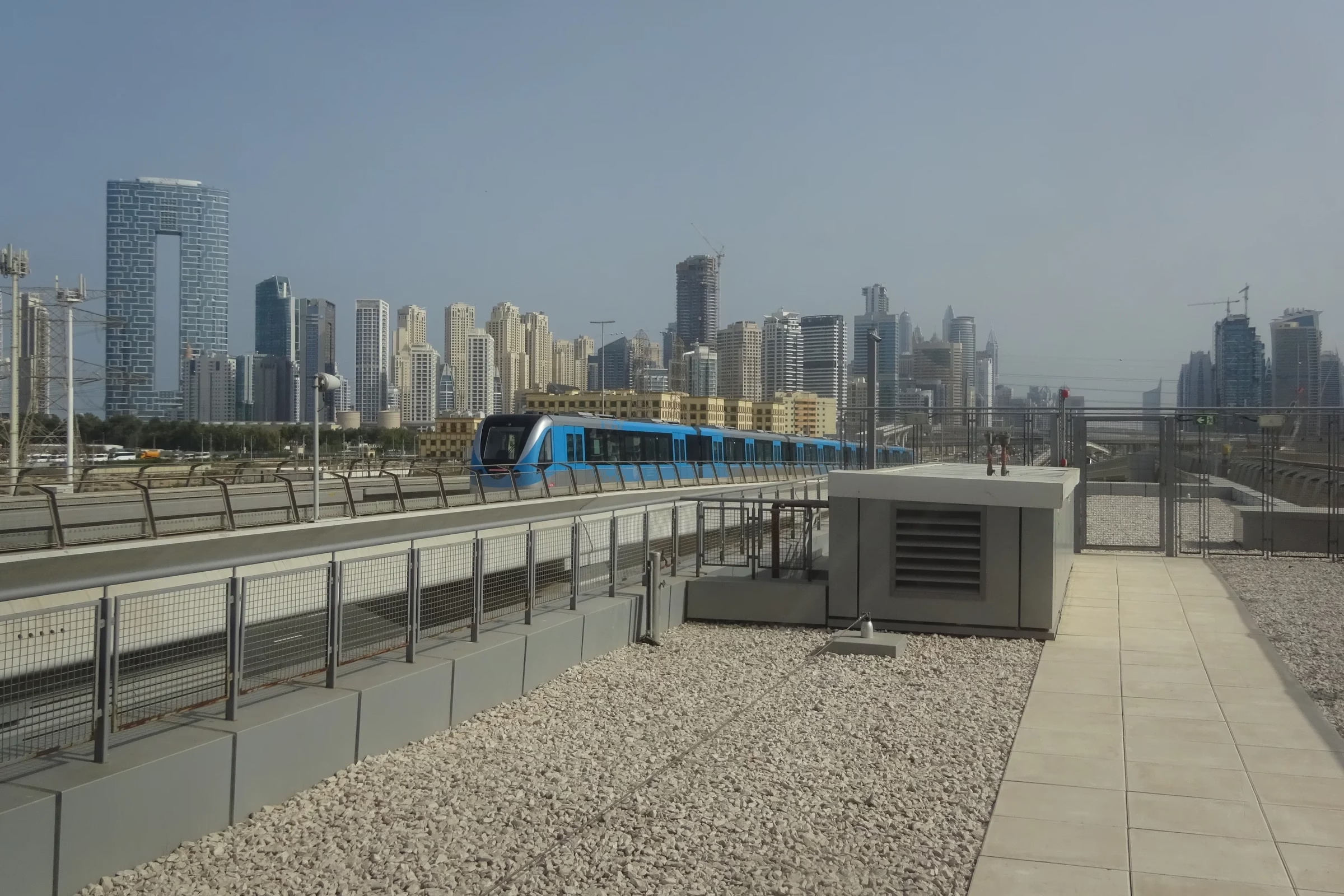
National Paints is the Red Line station formerly known as Jabal Ali, which the RTA renamed in 2025. It is also the point where the Red Line divides towards Expo City, so a pod link from there would serve riders from both branches. However, every route above is still a proposal, and none has a confirmed opening date.
There is a useful clue about timing. Khaleej Times reports that Ahmed Hashem Bahrozyan, CEO of the RTA’s Public Transport Agency, previously said the authority hoped to expand the system to other areas within two to three years if the first tests succeeded. He added that it would suit areas with narrow pathways and heavy traffic or footfall. Meanwhile, Khaleej Times also notes that the parking operator Parkin announced a partnership with Glydways in April to turn selected car parks into mobility hubs, where drivers could leave their cars and continue by pod.
Can You Ride Dubai Driverless Pods Yet?
Not as a member of the public, at least for now. The announcement confirms the location and length of the trial, but it does not mention public bookings, fares or passenger access. Therefore, it is best to treat the next four weeks as a technical test rather than a new service you can use.
That may change once testing is complete. Until the RTA announces details, the sensible approach is to follow the RTA’s official channels rather than any social media post promising rides. If you do visit Bluewaters, you may see the vehicles on their guideway, but please respect any barriers and signs around the test area.
Visiting Bluewaters During the Trial
Bluewaters is easy to combine with a day on the coast. A pedestrian bridge links the island with Jumeirah Beach Residence, so you can stroll across from The Beach, JBR in a few minutes. Alternatively, a taxi can drop you on the island itself; our guide to getting a taxi in Dubai explains how to book and pay.
If you prefer public transport, take the Red Line to DMCC or Sobha Realty, the two stations near Dubai Marina that connect with the Dubai Tram. From there, ride the tram to the JBR stops and walk to the bridge. Our Dubai Metro guide covers fares and Nol cards, and our guide to Dubai buses explains the feeder routes. As always, check the RTA’s journey planner before you travel, because timings can differ at weekends.
A few tips will make the visit easier:
- Go in the late afternoon, when the October heat begins to ease.
- Carry water, as the walk across the bridge is exposed to the sun.
- Keep an eye on the forecast, since the forecasters expect a chance of rain and fog in the coming days.
- Book restaurant tables on the island in advance at weekends.
Why First- and Last-Mile Links Matter in Dubai
Dubai has built one of the region’s most efficient rail networks, yet many residents still drive because the final stretch is the hardest part. A 15-minute walk is pleasant in January, but in August it is a different matter. Feeder buses help, although they add waiting time, and short taxi trips quickly add up for daily commuters.
Dubai driverless pods aim to close that gap without building a full rail line. Because the guideways are narrow and relatively cheap, they could reach places a Metro extension never would. They also fit a wider pattern: the city is already building the Metro Blue Line and preparing to tunnel for the Dubai Loop, as our guides to what Dubai is building now and the Dubai Loop update explain. If the trial goes well, pods could become the connective tissue between those big projects and the streets where people actually live.
What the Papers Reported
Gulf News covered the launch this morning with a reader-friendly explainer, setting out how the pods work, the proposed Metro links and a summary of what passengers need to know. Khaleej Times reported the trial as breaking news, with details of the sensors, capacity and cost savings, and followed up with a second piece on the routes under study, the earlier comments from the RTA’s Public Transport Agency and the Parkin partnership. Arabian Business had not covered the Bluewaters trial at the time of writing, although it reported the Parkin and Glydways mobility-hub plan in April.
Conclusion: Are Dubai Driverless Pods the Future of Getting Around?
It is too early to say, and the RTA is rightly treating Bluewaters as a test. What is clear is that Dubai driverless pods could solve a genuine, everyday problem: the last kilometre between a Metro station and your destination. The four-week trial at Bluewaters will show whether the technology is safe, reliable and comfortable in Dubai’s conditions. If it is, routes from National Paints, JVC, Business Bay and beyond could follow within a few years. For now, enjoy Bluewaters as it is, and watch this space. You might also enjoy our guide to cycling in Dubai, another easy way to cover short distances.
FAQ
What are the Dubai driverless pods?
They are small, AI-guided electric vehicles made by Glydways. Each carries four to six passengers on a dedicated guideway, away from regular traffic, and offers direct, on-demand journeys.
Where are Dubai driverless pods being tested?
The trial is on a designated route at Bluewaters, the island destination off JBR operated by Dubai Holding.
How long will the trial last?
It runs for four weeks from 11 October 2026, which takes it into early November.
Can the public ride Dubai driverless pods?
No public booking, fares or access arrangements have been announced. The RTA is currently testing the system’s safety and performance.
Which routes are being studied?
The RTA is studying a 2.8km link from National Paints Metro Station to Bluewaters, plus routes serving JVC, Dubai Festival City, Business Bay and Mohammed Bin Rashid City.
How fast do the pods travel?
They can reach 50km/h and travel up to 250km on a single charge.
Key Takeaways
- The RTA began a four-week trial of Glydways driverless pods at Bluewaters on 11 October 2026.
- Each pod carries four to six passengers at up to 50km/h on a dedicated guideway.
- The network aims to carry more than 20,000 passengers per hour in both directions.
- The trial tests safety, reliability, journey times and the passenger experience.
- Proposed routes include National Paints Metro Station to Bluewaters, JVC, Festival City, Business Bay and MBR City.
- No public rides, fares or bookings have been announced yet.
Useful Links
- Dubai Media Office: RTA launches trial operation of Dubai Glydways at Bluewaters (11 Oct 2026)
- Gulf News: Dubai launches driverless pods, is this the future of travel? (11 Oct 2026)
- Khaleej Times: Dubai trials new transport system with driverless pods (11 Oct 2026)
- Khaleej Times: Metro station to home in a driverless pod? RTA studies new routes (11 Oct 2026)
- RTA: Agreement to launch the first automated transit network programme
- Travel to Dubai Blog: Dubai Metro guide
- Travel to Dubai Blog: what Dubai is building now
- Travel to Dubai Blog: The Beach, JBR
Featured photo: the Dubai skyline seen from a Dubai Metro train, by Dubai Travel Blog, Unsplash. Body photos: Jpbowen, Wikimedia Commons (CC BY-SA 4.0), and Jan Seifert, Wikimedia Commons (CC BY 2.0); both cropped.